Preface: Why write this “Honest Review”?
Before I even stepped into the Banobagi Plastic & Aesthetic branch in Busan, I had already read over 50 posts on Dcard, PTT, and REDnote. To be honest, the opinions were extremely divided—some said the service quality was outstanding and the doctors were incredibly gentle, while others claimed it was just a high-volume operation without any real care. These conflicting reviews only made me more determined to go there in person and see for myself, with my own eyes and skin, whether this Dermatology clinic, which has been operating in South Korea for 22 years, is really worth a special trip for people from Taiwan.

This article won’t feature any sponsored filters, nor will it exaggerate or downplay anything just to drive traffic. I’ll document my full experience from the moment I made the appointment all the way through to one month after the procedure—covering whether the booking process was smooth, how friendly the staff were, whether the translation was accurate, how attentive the doctor was, how painful the treatment was, and whether there was anyone to follow up with me after the surgery. I’ll lay bare every detail that Taiwanese customers care about.
How to Book at Banobagi Plastic & Aesthetic in Busan: Tested 3 Methods – Which One Avoids Pitfalls Best?
Banobagi Plastic & Aesthetic offers three ways to make appointments: online booking through its official website, WeChat at Hannah972, and phone calls. As a foreigner who doesn’t speak Korean, I personally tried the first two methods.
Option 1: Book through the BeautsGO official website (Highly recommended ⭐⭐⭐⭐⭐)
Enter the treatment you’d like, your preferred date, and basic information. You’ll receive a confirmation reply within about 4 hours after submission. The platform features a fully Traditional Chinese interface, so you don’t need to worry about language barriers. More importantly, BeautsGO shows you the approximate price range right away, so you won’t be surprised to find the actual cost much higher than expected when you arrive.
Method 2: WeChat Hannah972 (ideal for those who pay attention to details ⭐⭐⭐⭐)
If you have very specific questions (such as “I’m allergic to lidocaine — can I still get hyaluronic acid injections?”), messaging Hannah972 on WeChat is a better option. The Chinese-speaking customer service responds within 2–6 hours, providing highly professional and detailed answers without using generic templates. After the conversation, you can schedule an appointment directly online, eliminating the need to back and forth with emails.
💡 My advice: If it’s your first time and you’re not sure what procedures to choose → book through the official website first to secure a slot, then ask customer service to make adjustments. If you already know exactly what you want → message Hannah972 on WeChat for the fastest resolution.
Arriving at the clinic: The first impression begins as soon as you step into the building
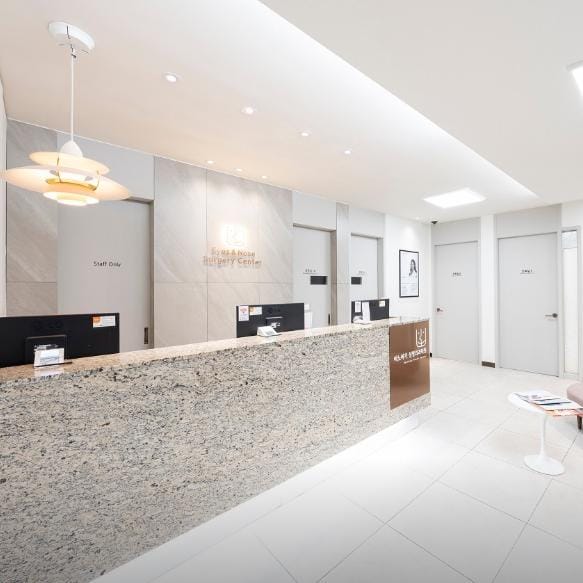
The Busan branch of Banobagi Plastic & Aesthetic is located in the ION City building next to Seomyeon Station, just a 3-5 minute walk from Seomyeon Station on Subway Line 2, making it extremely easy to find. The building is designed for commercial and office use, with cafes and convenience stores on the ground floor—perfect for killing time while you wait.
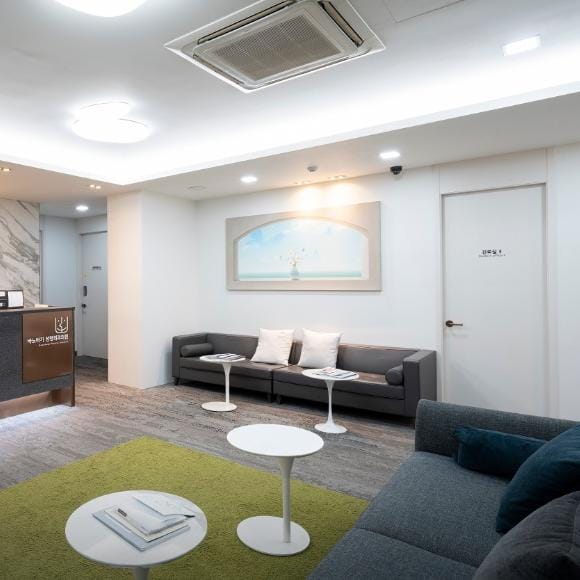
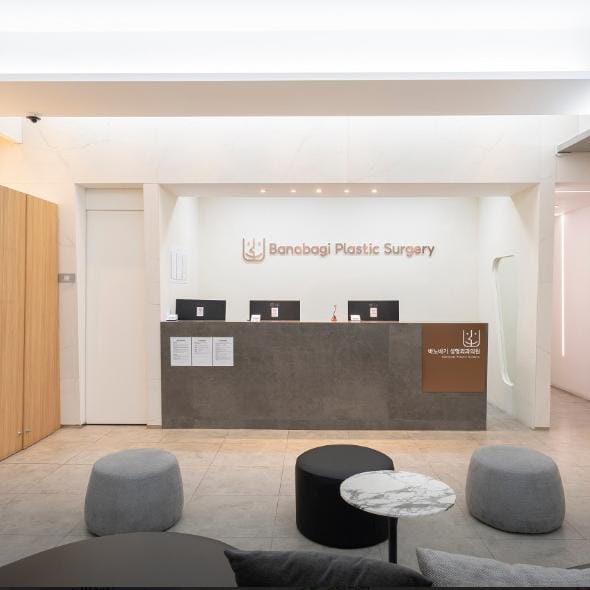
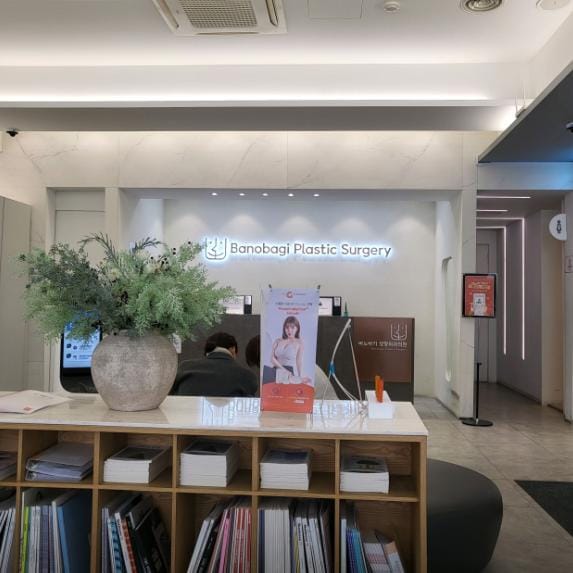
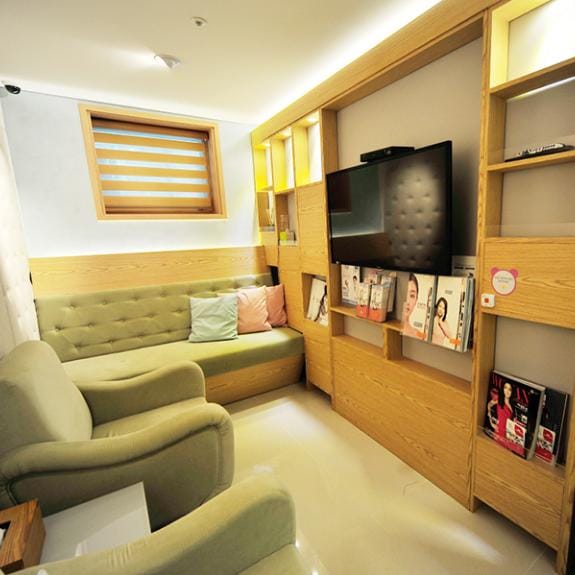
The first impression upon entering the clinic is cleanliness, brightness, and a sense of openness. The interior features a modern minimalist design—nothing like those overly flashy “beauty palace” clinics that can be intimidating, but rather something that resembles a high-standard dermatology practice. The sofas in the waiting area are comfortable, and there are treatment guides available in both Korean and Chinese on the tables, showing great attention to detail.
The first words spoken by the receptionist were the Korean phrase “안녕하세요.” But as soon as I said, “I’m from Taiwan,” they immediately switched to a smile and simple English, while also using a walkie-talkie to call over a translator. The whole process took less than a minute, with absolutely no awkward moments of a foreigner feeling lost.
Complete Guide to the Consultation Process at Banobagi Plastic & Aesthetic in Busan: Every Step from the Questionnaire to the Doctor’s Consultation
This was the most impressive part of the entire experience. At medical aesthetics clinics in Taiwan, consultations often give the impression of being rushed—just a 5-minute consultation followed by 30 minutes of sales pitch. But Banobagi Plastic & Aesthetic’s consultation process made me feel like a genuine “patient” rather than just a “client.”
Step 1|Complete the questionnaire (5 minutes)
A Traditional Chinese version of the questionnaire is provided, covering topics such as skin type, allergy history, past cosmetic procedures, current skincare products in use, and areas the patient wishes to improve. The questions are designed to be specific—instead of asking “Do you have acne?” it asks “Is your acne mainly concentrated in the U zone or T zone? Is it cystic or comedonal?”—and this kind of detailed questionnaire design itself reflects the clinic’s professionalism.
Step 2|Skin Analysis (8 minutes)
The nurse led me into the testing room, where a professional skin analysis device was used to scan my entire face. The machine automatically analyzed six key indicators: moisture level, oil distribution, Pore size, depth of pigmentation, degree of wrinkles, and sensitivity score. The test results were printed as a colorful report, featuring charts, numerical data, and comparisons with average values for people of the same age group.
To be honest, this device exposes every flaw in my skin condition 😅. But it’s precisely because the data is so clear that the doctor’s recommendations become much more convincing—treatment plans aren’t suggested based on intuition, but rather after reviewing the reports together.
Step 3|In-person consultation with a doctor (20 minutes)
The doctor took my test results and explained each item one by one. The interpreter was right beside me, providing real-time translation, ensuring no information was lost. First, the doctor identified the key issues with my skin—thin stratum corneum, excessive oil production in the T-zone, and mild chloasma on both cheeks—then suggested three treatment options:
- Plan A (Beginner): Pico laser full-face spot treatment + soothing care → ₩250,000, approximately 40 minutes
- Plan B (Mid-level): Pico laser + Rejuran full-face injection → ₩550,000, approximately 70 minutes
- Plan C (Comprehensive): Pico + Rejuran + customized hyaluronic acid injection formula → ₩800,000, approximately 100 minutes
Here’s the key: The doctor recommended Option B, not the most expensive Option C. He explained that my stratum corneum is relatively thin, and doing too many procedures at once might cause sensitivity, so he suggested treating it in stages. This is completely different from the approach of some clinics in Taiwan, which try to charge as much as possible.
Step 4|Price Confirmation & Plan Finalization (5 minutes)
The consultation room supervisor (similar to a consultant in Taiwan) will take it from there to explain the prices. They’ll provide you with a Chinese quote sheet that clearly lists: the name of the procedure, the price in Korean won, an approximate conversion rate to New Taiwan dollars, the estimated time required, and post-surgery precautions. There are no hidden fees, nor any pressure tactics like “you only get a discount if you sign up now.” I decided on Option B right away.
First-hand experience of treatment at Banobagi Plastic & Aesthetic in Busan: Is it painful? Fast or slow? Who performs the procedure?
This is probably what every Taiwanese person is most curious about—what does the treatment experience actually feel like? Below is my detailed account of undergoing “Pico laser treatment combined with Rejuran injections”.
First half | Pico laser treatment (about 25 minutes)
First, an anesthetic cream is applied for about 20 minutes, during which the nurse checks every 5 minutes to see if it’s too cold or if there’s any discomfort. Once the anesthetic cream is removed, the doctor personally operates the device (rather than handing it over to a nurse or esthetician), explaining to me through a translator as he treats the area: “This part targets superficial spots, so the energy level is low—you’ll only feel warmth.” “Next, we’ll address deeper spots; you might feel a slight stretching sensation like from an elastic band. Let us know right away if it’s uncomfortable.”
Actual pain level: 2.5/10. It’s basically just like a light tap from an eraser — completely tolerable. The doctor would apply an ice pack to cool down the area after treating each spot, handling the procedure with great care and never rushing through it.
Second Part | Rejuran Injection (about 30 minutes)
Rejuran uses extremely fine needles to deliver pinpoint injections all over the face, similar to hyaluronic acid injections but with a greater number of needles. The pain level is noticeably higher than that of Pico treatments, around 4/10, especially in the Forehead and under the eyes where the skin is more sensitive. However, the doctor did an excellent job controlling the pace—pausing every 5–6 injections to allow me to take deep breaths while applying ice compresses to ease the discomfort.
After the treatment, my face turned noticeably red, but the clinic immediately applied a cool, soothing facial mask designed for cosmetic procedures, while using an iontophoretic device to enhance absorption. By the time the mask was removed, the redness had subsided by 60%. A layer of repair cream was then applied, and that completed the entire treatment process.
Feelings right after the procedure
Right after the procedure, my face felt slightly warm and tight, but it wasn’t to the point where I couldn’t go out in public at all. The doctor said I could go shopping and eat normally as long as I paid attention to sun protection and moisturizing. That afternoon, I spent 2 hours strolling around the Seomyeon shopping area—wearing a mask was completely fine.
Translation Service Review: This Is the “Hidden Sense of Security” That Foreigners Really Need
I can communicate in English without any issues, but in medical contexts, accurate translation by a native speaker remains extremely important. What impressed me the most about Banobagi Plastic & Aesthetic’s Chinese translations were three specific details:
- Medical terms are translated accurately: It’s not just a basic translation suitable for everyday conversation. Terms like “stratum corneum,” “dermis layer,” “Collagen regeneration,” and “pigment metabolism” are all used correctly, indicating that the translator has received proper training in medical fields.
- Constant accompaniment throughout: From the moment we entered until we left, the translator was almost never out of my SISUN. Whatever the doctor said, the translator repeated it instantly, keeping perfect synchronization.
- They go the extra mile to explain cultural differences: for example, if a doctor says “Avoid spicy foods after the procedure,” the translation will add that “what South Koreans mean by spicy isn’t the mild spiciness of Taiwanese street food, but rather a level of spiciness comparable to that of bibimbap.” Such details make me feel truly taken care of.
For Taiwanese who know absolutely no Korean and only have a basic level of English, this service is undoubtedly the key reason to choose Banobagi Plastic & Aesthetic. There’s no need to bring a friend as a translator, nor to rely on Google Translate while gesturing to explain things.
Banobagi Plastic & Aesthetic’s Post-Procedure Service in Busan: It’s not just a one-time thing — they actually keep track of you!
This is what, in my opinion, sets Banobagi Plastic & Aesthetic apart from many other clinics. After the treatment, instead of just saying “That’s it, goodbye,” they provide a comprehensive post-operative care kit.
- 📄 Chinese Post-Procedure Guide: Illustrated with photos and text, it clearly explains what to do and what to avoid on days 1–3, days 4–7, and during weeks 2–4.
- 🧴 Post-procedure care set: includes a repair cream, sunscreen, and gentle cleansing gel — enough for 3–5 days
- 📱 Line Follow-up Group: Add me to a Line group with translators and nurses who will proactively check in on your recovery on the 3rd and 7th days after the procedure
On the third day after the procedure, I received a message in my Line group asking if my face would still be red and if there was any peeling. I sent them a selfie, and the nurse immediately replied, “The recovery is going well. Just keep using moisturizers and sunscreen—no need to worry.” This kind of follow-up care is actually quite rare at clinics in Taiwan, where most patients are left to it after completing their treatment.
One-month follow-up after the procedure: Real Before/After experiences
| time | Skin condition | Experience |
|---|---|---|
| Days 1–2 after the procedure | Slight redness, with very tiny scabs in a few spots | It doesn’t hurt or itch, but you need to resist the urge to pick at the scab. |
| Days 3–5 after the procedure | The scabs fall off naturally, and the spots fade significantly. | I start to feel it’s worth it. |
| Day 7 after surgery | The skin tone is noticeably even, with reduced oil production on the T-zone. | A friend asked me if I changed my skincare products |
| Day 14 after the procedure | The effects of Rejuran are starting to show, leaving the skin plump and hydrated. | The makeup applies incredibly seamlessly, giving a glossy finish without the need for highlighters. |
| Day 28 after the procedure | Spots are reduced by about 60%, while the refinement of Pores is significantly improved. | This is the best condition my skin has been in in the past five years. |
To be honest, the pigmentation-reducing effects of Pico laser were better than I expected—my sun spots on the cheeks were almost invisible after just one month. The “plumpening effect” of Rejuran started to show around day 10, and it wasn’t that fake, artificial fullness; rather, it felt like the skin was naturally becoming thicker and healthier.
Big Differences in the Experience at Banobagi Plastic & Aesthetic’s Busan Branch: Why I Want to Fly There Again
| Comparison Items | Taiwan Clinics (Personal Experience) | Banobagi Plastic & Aesthetic Busan |
|---|---|---|
| Convenient booking process | Book via Line – you can usually get a consultation on the same day or the next day. | Multiple booking channels available; it’s recommended to book 3–5 days in advance. |
| Consultation Time | 5-15 minutes, sometimes it feels like I’m in a rush. | 20-30 minutes, the doctor sits down for a relaxed chat |
| Marketing intensity | Mid-to-high; it’s often included in packages or offered as an add-on. | Low, and they even recommend cheaper options. |
| Treatment Provider | Some treatments are performed by nurses/stylists. | The doctor performs the procedure personally throughout the whole process. |
| Post-operative follow-up | Most don’t, or they just send a message on Line saying “Are you okay?” | Exclusive LINE group – proactive check-ins on days 3/7 |
| Price | Higher (about 30-50% more expensive for the same service) | Significantly lower, and the flight tickets are still a good deal |
| Overall impression | It’s like purchasing a service. | It’s like receiving medical care. |
The comparison in the last column reflects my most genuine feelings. At medical aesthetics clinics in Taiwan, you often feel like you’re “buying a treatment plan”; but at Banobagi Plastic & Aesthetic, you feel like you’re “receiving medical care” — this difference stems from the doctors’ dedication, the thoroughness of their consultations, and the “de-commercialized” approach throughout the entire process.
Comprehensive Review of Banobagi Plastic & Aesthetic in Busan: Pros and Cons (Unfiltered Version)
✅ Pros: These experiences are truly great
- The doctor’s expertise is impeccable: he handles everything personally, from the consultation to the procedure, and his diagnosis method, based on skin analysis data, is truly convincing.
- High-quality Chinese translation: accurate medical terminology, full guidance throughout, plus explanations of cultural differences
- No aggressive selling: This is what many Taiwanese care most about, and Banobagi Plastic & Aesthetic has absolutely no such issue.
- Post-surgery follow-up is excellent: The Line group system allows foreign patients to return home with peace of mind.
- Transparent and competitive pricing: All quotes are clearly stated, with no hidden price increases on the spot
- Convenient location: Right outside the Seomyeon station, with various shopping and dining spots right around the corner.
⚠️ Downsides & Things to Keep in Mind: Be prepared for these
- Appointments need to be made in advance: Unlike in Taiwan where you can schedule and see a doctor on the same day, during peak times (weekends), it’s best to book 1–2 weeks ahead.
- Closed on Sundays: Be sure to check your itinerary and avoid scheduling trips for Sundays in case it’s closed
- Recovery time is required: Intense laser treatments may cause redness or crusting for 2–3 days, so it’s recommended not to schedule important events the day after the procedure.
- There is a fee for card payments: Using foreign credit cards incurs a fee of around 3%, so it’s recommended to bring cash or use a South Korea account.
- The effect of a single treatment is limited: Issues like spots and acne scars usually require 3–5 treatments to achieve the best results. Since you can only have one treatment per trip, be prepared for multiple round trips.
🏥 Appointment Card for Banobagi Plastic & Aesthetic Busan Branch
👆 Click the button above to access Banobagi Plastic & Aesthetic’s official booking page. You can get consultations in Chinese, receive online quotes, and schedule appointments without needing a South Korea phone number.
7 Most Common Questions from Taiwanese Customers – Answers at a Glance
Q1: Is it really okay if you don’t know Korean? What if your English isn’t good either? No p
roblem at all. The clinic provides full Chinese translation services—communication is handled in Chinese from the appointment stage to post-surgery follow-up. The nurses also speak basic Chinese (“Will it hurt?” “Do you need ice?”), so there will be absolutely no communication issues.
Q2: Does Banobagi Plastic & Aesthetic only serve customers from South Korea? Are foreigners treated differentl
y? While Korean locals do make up the majority of their clients (about 70%), they offer a very thorough service process for foreigners as well. I didn’t experience any difference in treatment at all, and the prices are consistent—there’s no extra charge for foreigners.
Q3: How much time is recommended to allocate from the day of booking to the actua
l treatment? It’s advisable to set aside 2–3 hours to stay comfortable (including waiting, filling out questionnaires, tests, a consultation, the treatment itself, and post-treatment care). It took me about 2 hours and 15 minutes from the moment I entered until I left.
Q4: Is it cost-effective to undergo multiple procedures in Busan at once? Yes
, but you should follow the doctor’s advice. Not all procedures are suitable for being done on the same day (for example, chemical peeling combined with laser treatment might be too stimulating). It’s recommended to consult first, as the doctor will help you create the most efficient treatment plan.
Q5: Can I take a flight back to Taiwan right after the treatment? For non-
invasive procedures such as Pico treatments, hyaluronic acid injections, and Botox, you can fly on the same day with no issues. However, it’s recommended to stay for at least 1–2 days to allow your skin to recover initially, and to make it easier to return for a follow-up appointment if any problems arise.
Q6: Is it awkward for guys to go? Not at all.
It’s quite common for men in South Korea to get skin care treatments, and clinics offer specialized programs tailored for men (such as oil control and Pore regulation). From what I’ve observed, the gender ratio in the waiting area is around 4:6, so there are plenty of men there.
Q7: Do I need to buy separate post-surgery skincare products? Are those sold at the clinic w
orth purchasing? The clinic offers trial sets after the procedure, and if you find them effective, you can buy the authentic versions. The brand developed by Director Dr. Yong has an excellent reputation in South Korea, but there’s no need to stock up just because you’re there—make sure it suits your skin type before buying.
Summary: Who is the ideal candidate for a treatment at Banobagi Plastic & Aesthetic in Busan? My honest advice
After going through the full experience from scheduling the appointment to one month post-surgery, I rate Banobagi Plastic & Aesthetic’s Busan branch 4.5/5 stars. The 0.5 star deducted is due to the geographical limitation that you can only have the procedure once per trip—if it were located in Taipei, I would definitely go there every month.
🙆 Who It’s Perfect For
- “Advanced users” who have already undergone cosmetic procedures and know exactly what they want
- Those troubled by spots, acne scars, and uneven skin tone looking for professional Dermatology treatment for a systematic solution
- Those who prefer to have the procedure performed by a doctor personally rather than handing it over to an aesthetician
- Travelers planning a trip to Busan who want to take advantage of medical beauty treatments as part of their itinerary
- Smart consumers with limited budgets who don’t want to compromise on quality and are looking for great value for money
🙅 Not suitable for these people
- Those hoping for a complete transformation in just one treatment session (skin treatments require patience and multiple sessions)
- Complete beginners with no experience in cosmetic medicine and no idea what they want to do (it’s recommended to start with basic treatments in Taiwan to get a feel for it first).
- Those who can’t properly protect their skin from sun exposure and maintain proper hydration after the procedure (in South Korea, failing to take care of the skin after returning to Taiwan means the procedure was in vain).
To be honest about the last point: if you’re still hesitating about whether to fly to Busan for medical aesthetics treatments, my advice is to schedule a consultation first—there’s no need to make a decision right away. The consultation process at Banobagi Plastic & Aesthetic itself is like a thorough skin check-up. After the examination and hearing the doctor’s recommendations, you’ll naturally know whether it’s worth making the trip just for your face.
📅 Are you ready to book?