Non-Surgical Face Lifting in South Korea · Decision Guide
Say goodbye to sagging cheeks and blurred jawlines! Sofwave offers precise heating at the 1.5mm collagen layer, starting at 1 million KRW in South Korea.
Soft sagging around the mouth and a blurring of the jawline are two common signs of aging that become more noticeable after the age of 30. Sofwave, a highly popular treatment in South Korea, uses SUPERB synchronized ultrasound to deliver energy precisely to the 1.5mm collagen layer. Without the need for surgery and with almost no recovery time, it can restore lost facial contours. This article explains in detail how it works, its cost, who is suitable for it, and how it differs from traditional ultrasound or radiofrequency treatments, helping you decide whether it’s worth getting done before your trip to South Korea.
What exactly are double chin and jawline? Why do they appear as we age?
What causes sagging skin around the mouth and a blurred jawline? How does Dermatology in South Korea address this issue?
💡
“The flesh around the mouth” refers to the sagging skin on either side of the lips, near the lower jaw. Medically speaking, this corresponds to the excess fat outside the Marionette Line Correction area. The “lower jaw line” is the contour line that runs from in front of the ears down to the chin. In South Korea’s Dermatology industry, when assessing whether someone appears older or not, doctors first check how distinct this line is—if it’s blurred, the entire face seems to sag downward.
These two issues are usually not caused by being “fat,” but rather by the loss of collagen and elastin, which weakens the skin’s support structure and leads to slight sagging around the corners of the mouth and chin. When evaluating such conditions, doctors in South Korea first lift the skin with their hands to see if the contours can be restored—if they can, it’s likely due to loose skin; if not, it’s often accompanied by shifting deep fat layers, requiring a more thorough assessment.
Why does the jawline tend to blur after the age of 30? The timeline of collagen loss
🪄
Collagen levels start to decline gradually around the age of 25, losing about 1% per year. The most noticeable effects usually appear between 35 and 45 years old: during this period, both collagen and elastin decrease, the dermis thins out, and the skin becomes like a weak net. Sagging in the corners of the mouth and along the jawline begins due to gravity.
The general timeline looks like this: starting at age 25, the rate of skin production slows down compared to the rate of loss; after age 35, sagging becomes more noticeable, and one might notice that the contours of the side face don’t look as good as before when taking selfies; above age 45, if there’s also a downward shift in the deeper fat layers, the flesh around the mouth becomes even more prominent. Intervening earlier—when collagen is still within a reversible range—requires fewer corrective measures and costs less. This is also why doctors in South Korea often recommend addressing mild to moderate sagging right away.
Is excess flesh around the mouth the same as a Double Chin? The criteria used by South Korea’s doctors to make a diagnosis
🪄
It’s different, and so are the treatment approaches. A Double Chin is usually caused by excess subcutaneous fat, so the solution lies in fat reduction methods such as cryolipolysis, injectable lipolysis, or ultrasound lipolysis. When there’s excess flesh around the mouth and a blurred jawline, it’s often due to loose skin combined with weak fascial support, in which case tightening and lifting procedures are needed rather than fat reduction.
South Korea’s doctors use straightforward criteria to make judgments: if lifting the skin reveals a layer of soft flesh and the appearance improves significantly when pulling it upward, it’s usually classified as skin laxity, making it suitable for devices like Sofwave that stimulate collagen regeneration. On the other hand, if there’s a thick layer of fat beneath the skin with little change even after lifting, doctors recommend addressing the fat first before considering lifting procedures. Sometimes both conditions exist simultaneously, in which case a combination of “fat reduction + tightening” is used rather than focusing on just one treatment.
What is Sofwave? Why does it focus on the 1.5mm collagen layer?
How Does Sofwave’s SUPERB Synchronized Ultrasound Achieve Precise Heating at 1.5mm?
🫧
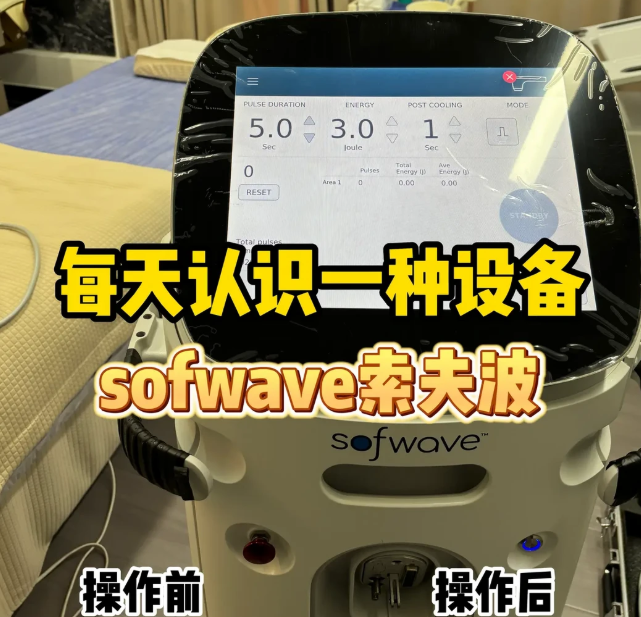
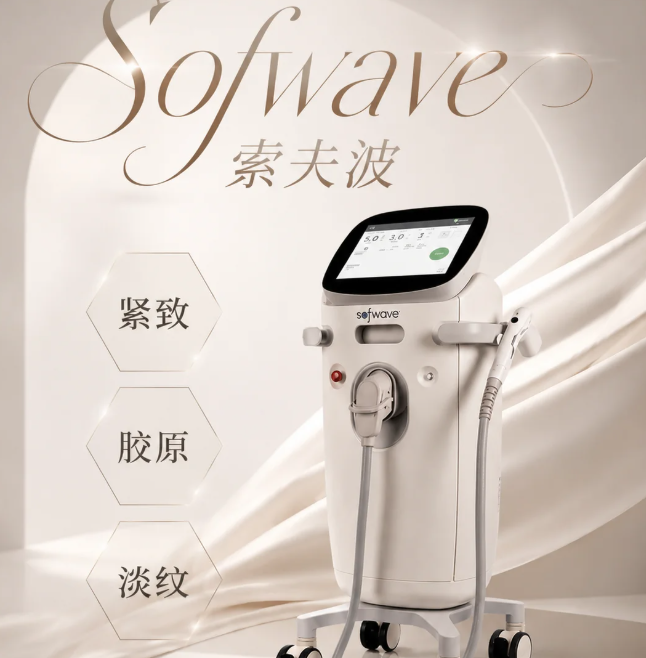
Sofwave’s core technology is called SUPERB (Synchronous Ultrasound Parallel Beam). With each emission, the 7 sets of ultrasound crystals in the probe generate 7 parallel beams “simultaneously,” creating a large heated area in the middle dermis at a depth of 1.5 mm beneath the skin—unlike traditional methods that heat the skin in small, individual spots.
A depth of 1.5mm is crucial—it precisely targets the middle layer of the dermis, where collagen and elastin are most densely concentrated. When heated to 60–70°C, this temperature triggers the production of “new collagen,” helping to tighten the loose tissue structure again. Meanwhile, the device features built-in SofCool technology for epidermal cooling, keeping the surface skin temperature below 45°C, which results in minimal discomfort and almost no damage to the epidermis. According to the manufacturer, Sofwave has been approved by the U.S. FDA and can be used to lift eyebrows, define the submental area and neck contours, as well as reduce fine lines.
BLS Hospital Main Campus
BeautsGO 認證
📍 BLS Clinic Building, 13-5, 67-daero, Dosan-gu, Gangnam-gu, S
eoul 🚇 10-minute walk from Exit 4 of Apgujeong Rodeo Station o
n the Suin-Bundang Line 🕐 Monday, Thursday, Friday: 10:00–21:00 | Tuesday: 10:00–19:00 | Wednesday: 10:00–17:00 (Closed on weekends)
💰 Reference prices for the treatment (South Korea market rates)
| Recommended Items | Reference price |
|---|---|
| Sofwave 100 Units (Local/Entry-Level) | Starting from ₩1 million |
| Sofwave 200 sessions (full face) | Please check at BeautsGO. |
✨ Specializations: Sofwave, Titanium Lifting, DongAn Center Introduction | Services available in Chinese
💬 Chinese
Customer Service:
WeChat: Hannah972
Customer Service:
WeChat: Hannah972
What’s the difference between Sofwave and traditional HIFU? The key difference between 1.5mm and 4.5mm
🪄
Many people confuse Sofwave with “ultrasonic scalpels (HIFU)”, but there’s a significant difference in depth of penetration. Traditional ultrasound devices operate at 3.0–4.5mm, reaching the fascia layer or even deeper, whereas Sofwave targets only the 1.5mm middle dermal layer. This difference determines both the associated risks and the ideal candidates for use.
Using a depth that’s too great—such as 4.5mm—may result in strong pulling effects, but if the energy affects the subcutaneous fat, it could potentially lead to fat atrophy and sunken cheeks over time. Sofwave operates at just 1.5mm, targeting only the collagen layer without impacting deeper fat or nerves, making it a better choice for those with mild to moderate sagging, who prefer to avoid risks or are sensitive to pain. The table below helps you quickly understand how to choose among these four common lifting methods.
| Method | Depth of Action | Recovery period | Suitable scenarios |
|---|---|---|---|
| Sofwave | 1.5mm Real Leather | Almost zero | Mild to moderate relaxation, pain sensitivity, preference for low risk |
| Traditional ultrasound (HIFU) | 3.0–4.5mm | Slight swelling for 1–3 days | Moderate to severe ptosis, willing to endure the recovery period |
| Radio Waves (Thermage-style) | Full-layer heating | Almost zero | Full-face tightening and improved skin texture |
| Thread Lifting | Subcutaneous/fascial | 3–7 days | Significant sagging – immediate visible lifting effect |
Price of Sofwave in South Korea revealed: starting at 1 million KRW, how is the number of sessions calculated?
💰
According to current market rates in South Korea, 100 sessions (a basic partial treatment) cost around ₩990,000–1,200,000, which aligns with the mentioned price range of “starting from 1 million Korean won.” For a full-face treatment, 200 sessions are typically required (around ₩2,000,000–2,400,000), and adding the neck area brings the total to 300 sessions (around ₩2,700,000–3,600,000). Using an approximate exchange rate of ₩10,000 ≈ NT$225, 100 sessions would cost around NT$22,000–27,000 — roughly 30% to 50% lower than typical prices for similar treatments in Taiwan.
How to choose the right number of servings without overloading the plate:
- 100 doses: Targeted enhancement (such as chin line, corners of the mouth), suitable for those with a limited budget or trying it for the first time.
- 200 doses: Standard full-face treatment – most people see the most complete results at this dosage.
- 300 sessions: Full face + neck, ideal for those with sagging necks as well.
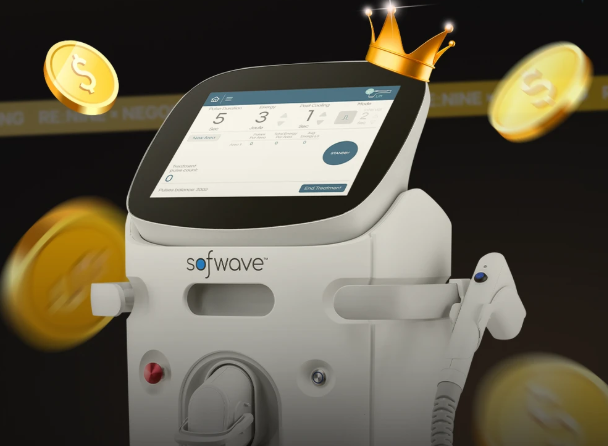
Quick tip: More hairs isn’t always better—what matters most is “allocating them to the right areas.” South Korea’s dermatologists first divide the face into zones (chin, mid-face, eye area, Forehead, neck) before determining how many hairs to place in each zone. Make sure to ask ahead of time what’s included—how many hairs and which areas—are covered, so you won’t be charged extra upon arrival.
Am I a good candidate for Sofwave? How should I make this decision?
Who is a good candidate for Sofwave? A comparison of suitable and unsuitable candidates at Dermatology clinics in South Korea
👭
The table below helps you quickly determine which category you fall into. The device is recommended for people aged 30 and above who show mild to moderate signs of aging; for those with severe sagging or noticeable fat accumulation, Sofwave alone may not yield sufficient results.
| ✅ Ideal candidates for Sofwave treatment | ⚠️ Those who recommend evaluating first or avoiding it |
|---|---|
| Age: 30–50 years old, just starting to notice sagging | Age: Significant sagging and very thin skin; a single treatment isn’t sufficient to address the issue. |
| Degree: Mild to moderate sagging, blurred jawline | Severity: Severe sagging, noticeable Double Chin (fat type) |
| Pain sensitivity: Fear of pain, reluctance to use anesthesia, concern about the recovery period | What to Expect: Intense lifting for an “instant dramatic face transformation” |
| Time: If you’re flying to South Korea on the same day, you can take the chance to get it done and then go shopping right after. | Constitution: Pregnancy or breastfeeding, edema-prone constitution, active infections on the face |
| Goal: Achieve a natural firmness while preventing further sagging | Budget: Only enough for 100 sessions, but hoping for a dramatic transformation of the entire face |
| Combination: Want a comprehensive treatment combining Filler and hyaluronic acid injections | Alternative: Some have suggested thread lifting/surgery; Sofwave only serves as an adjunct. |
Real Accounts of Pain During and Recovery After Sofwave Treatment
🫧
During the procedure: Most people describe feeling a “warmth” or “mild stinging heat,” rather than the deep ache associated with traditional ultrasonic devices. Thanks to SofCool cooling, about 90% of patients don’t need anesthesia; only a few who are sensitive to heat request topical anesthesia. The procedure takes around 30–35 minutes for 100 sessions and 45–55 minutes for 200 sessions, during which time you can scroll through your phone or chat with your Chinese-speaking surgeon.
Post-surgery recovery (make sure to note this):
- You might experience mild redness and a slight warmth right after the procedure, which will subside naturally within 30–60 minutes. You can go shopping and eat out the same day.
- Increase moisturization and use SPF 50+ sunscreen within a week, and avoid exfoliation and acid-based treatments.
- Avoid high temperatures for three days: skip saunas, steam baths, and intense exercise for now.
- Do not press or massage the treatment area forcefully to allow collagen to regenerate peacefully.
- The 1–3 months after the procedure is the collagen maturation period, during which the results will continue to improve—don’t rush to judge.
Sofwave Results Timeline: How long does it take to see the jaw line appear, and how long does the effect last?
🪄
Immediately after the procedure, there’s a slight sense of tightness (due to the tissue contracting from heat), but that’s not the full effect. The real changes come from collagen regeneration: you’ll start to notice them around 2–4 weeks later, with a sharper jawline; by 3–4 months, the results peak, as excess fat around the mouth and contour folds become more apparent; after that, the effects gradually stabilize.
How long does it last? For most people, the effects of a single treatment last around 12 months, after which they gradually fade due to natural aging. The manufacturer states that “one treatment is usually sufficient” for most individuals; if you want to extend the duration, you can have another treatment after a year, or combine it with radiofrequency or hyaluronic acid treatments for long-term maintenance. For those on a tight budget, it’s recommended to invest in “adequate treatments in the right areas” rather than focusing solely on a high number of treatments overall.
| ✅ Advantages of Sofwave | ⚠️ Things to keep in mind |
|---|---|
| ✅ Precise 1.5mm tip that doesn’t damage deep fat layers, resulting in low risk | ⚠️ For severe sagging, the lift strength is insufficient; a different treatment plan or additional procedures are needed. |
| ✅ Nearly no recovery time — treatment can be done on the same day you arrive in South Korea | ⚠️ It takes 1–3 months for the full effects to appear—patience is required. |
| ✅ Minimal discomfort – most procedures don’t require anesthesia | ⚠️ The price per session is quite high—make sure to factor in the number of sessions and treatment areas. |
| ✅ Treatments in South Korea are typically 30% to 50% cheaper than those in Taiwan | ⚠️ The quality of clinics varies greatly—make sure to choose clinics that use genuine equipment and employ qualified doctors. |
Frequently Asked Questions FAQ
Q: Is one session of Sofwave enough?
A: Most people only need one session. According to Sofwave’s official FAQ, most patients require just one treatment, and 72% of clinical trial participants reported “significant improvement” (Sofwave Official FAQ, accessed September 2026).
Q: Which is less painful, Sofwave or Ultherapy?
A: The Sofwave treatment is generally less painful. This is because Sofwave comes equipped with SofCool skin cooling technology, meaning that about 90% of patients don’t need anesthesia (per the treatment information on RE:BERRY Myeongdong’s official website, accessed in September 2026). In contrast, traditional Ultherapy uses a depth of 4.5mm, which results in more noticeable pain.
Q: Can I go shopping right after the procedure?
A: Yes, with almost no recovery time. According to the official Sofwave technical page (accessed in September 2026), there is only mild redness for 30–60 minutes after the procedure, no swelling or bruising, allowing patients to resume normal activities on the same day.
Q: How long does it take to see the lower jaw line tighten?
A: Effects typically become noticeable after about 2–4 weeks, with peak results achieved in 3–4 months. This is because it takes around 12 weeks for new collagen to fully develop, and the manufacturer recommends waiting 3 months to observe the results (Sofwave official FAQ, accessed September 2026).
Q: How much cheaper is it to get cosmetic procedures in South Korea compared to Taiwan?
A: The price is usually 30% to 50% lower. For reference, in South Korea, a 100-unit treatment costs around ₩990,000–1,200,000 (approximately NT$22,000–27,000), while similar treatments in Taiwan tend to be more expensive (prices based on Val:U Clinic / RE:BERRY’s 2026 listings).
Or
💬 Book via WeChat: Hannah9
72
Chinese customer service responds instantly
💬 Book via WeChat: Hannah9
72
Chinese customer service responds instantly
📱 Add WeChat Hannah972 · One-on-One Chinese Support for South Korea’s Medical Aesthetics

Scan the code or search for WeChat ID Hannah972 to add us as a friend—free access to information on availab
le treatments and packages. You can also send photos of your skin before scheduling an appointment for a preliminary assessment.
References
- Sofwave Official FAQ (staging.sofwave.com/patients/faq), accessed in September 2026: information on the 1.5mm principle, ideal candidates, number of treatment sessions required, and patient satisfaction rate of 72%.
- Sofwave’s official technology page (staging.sofwave.com/physicians/technology), accessed in September 2026: SUPERB technology, 7 probes, 60–70°C temperature range, SofCool cooling system.
- RE:BERRY Myeongdong official website – Sofwave treatment page, accessed in September 2026: Price in South Korea is ₩990,000 per 100 sessions, no recovery period required, and anesthesia is usually not needed in about 90% of cases.
- Val: U Clinic’s official website – Sofwave pricing page. As of September 2026: 100 sessions cost ₩1.1–1.2 million, 200 sessions cost ₩2–2.4 million, and 300 sessions cost ₩2.7–3.6 million.
Related Recommendations
- Special Offers at BLS Dermatology in Cheongdam, Gangnam, South Korea | Complete Guide to Costs of Sofwave, Titanium Lifting, and DongAn Center Introduction Treatments + Transportation Tips
- Dcard is going viral! Cheongdam Minit Dermatology’s August Special Pricing List | Sofwave: Only 500 per session – save even more when bringing a friend!
- Actual price breakdown for ANEW VA Dermatology: HIFU costs less than 10,000 yuan, while Pico/ONDA/Sofwave prices are fully disclosed
- Is Thermage in South Korea worth it? An honest review from Galleria’s “Red Mark Specialist”: Adequate treatment sessions and energy adjustment are key
- No more hiding! BNS Dermatology’s 2026 price list: UltraShape US version – 100 sessions at 800,000; Thermage FLX – 300 sessions at 1.5 million.
- Big Sale at JRYN Dermatology Seomyeon Branch in Busan from September to October | American-style popular BARUNGYN FLX 300 available for 880,000 KRW, plus 10% points reward on purchases