
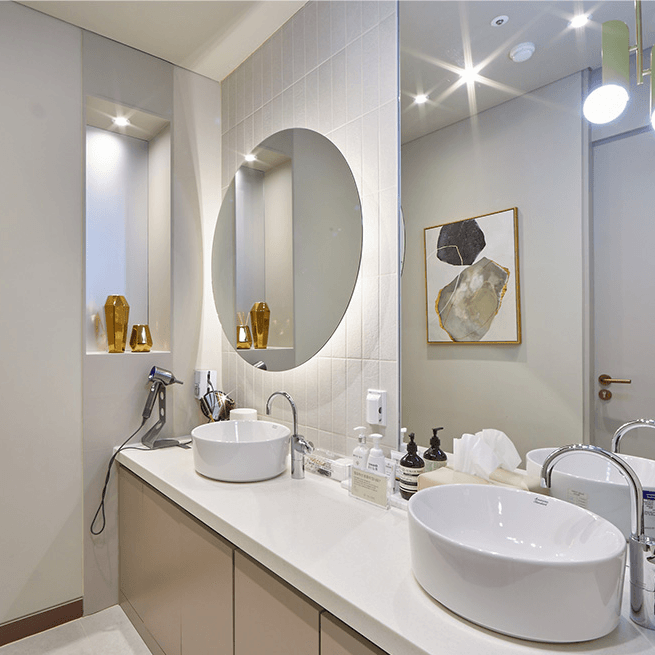
Before going to Busan, two of my close friends had already undergone HIFU treatment in South Korea. One said it was so painful that she cried, while the other claimed she didn’t feel anything at all. With no idea what I could expect, I went to THE FIRST DERMATOLOGY CLINIC in Busan and had the procedure performed by Director Seo Ji-soo. It’s been a month now, so let me be honest and share my experience.
Why was Busan Debusoft ultimately chosen?
To be honest, at first I wanted to go to a well-known chain clinic in Gangnam – they had a good reputation and many successful cases, so the risk of encountering problems seemed lower. Later, when I looked at the information about Busan Debeost on BeautsGO, several points really impressed me: First, the “director personally performs all procedures” policy – Dr. Xu Zhixiu was in charge of the entire process, from pre-treatment assessment to the actual procedure itself, which was different from the typical “one meeting and then leaving” model. Second, foreign patients were charged the same price as local ones, without any additional fees. Third, the price of the second-generation HIFU device (Ulthrea) started at 1.21 million won, which was clearly more cost-effective than in Taiwan.
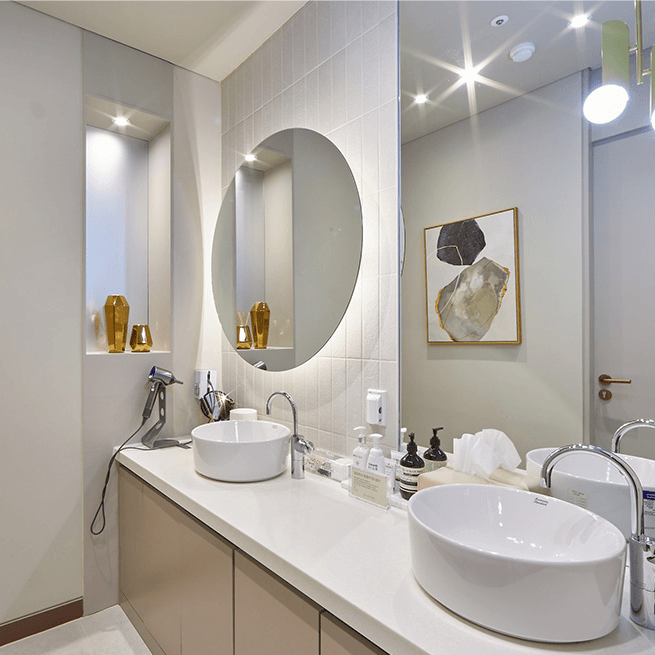
What finally convinced me was the high cost-performance ratio of traveling to Busan itself: air tickets were cheaper than those to Seoul, and accommodation costs were also lower. On top of that, it was feasible to visit Gancheon-dong to see the Little Prince and enjoy some pork bone soup rice during the same trip, making it actually more economical than going to Seoul specifically for medical beauty treatments.
Preoperative assessment: It’s somewhat different from what I had originally anticipated.
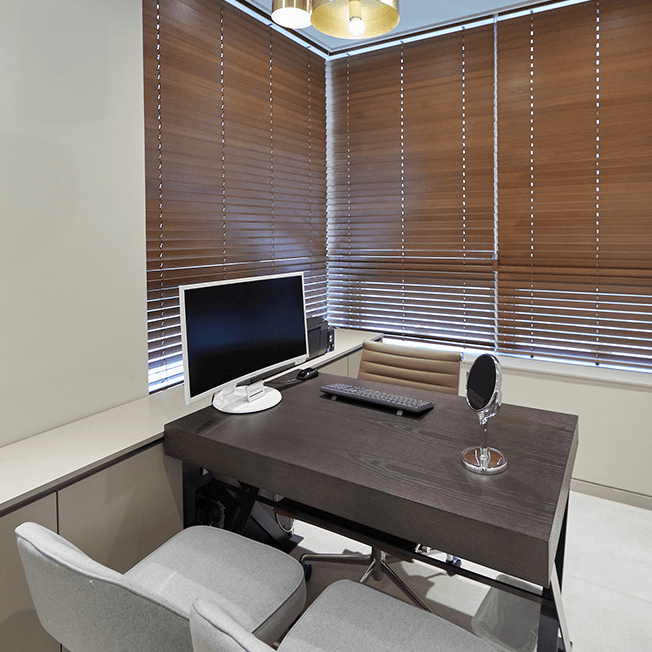
I originally thought that a pre-operative assessment simply meant “lying naked so that the doctor could examine the skin”, but to my surprise, DeFoster in Busan used a professional skin testing device. Before starting the procedure, Dr. Xu used the device to take several photos of the face under different lighting conditions, and immediately on the screen, we could see the extent of Collagen loss and the distribution of elasticity in the deeper layers of the skin.
This step surprised me a bit. I had undergone two other treatments in Taiwan before, but the medical institution never took any pre-treatment measurements using instruments. Director Xu pointed at the screen and said, “Your contour lines here (referring to the lower jaw line) show the most obvious signs of relaxation, and your Apple Zone also has slight sagging. This time, the HIFU treatment will focus mainly on these two areas.” It was only at that moment that I truly understood why the number of HIFU sessions assigned to each person varied—turns out that the areas requiring treatment really differ from person to person.
Process of injection: How painful is it actually?
Let me state the conclusion first: It was more comfortable than I expected, but not completely painless. I had 600 injections administered across my entire face. Dr. Xu mentioned that the area at the junction of the lower jawline and the neck would be more sensitive, and suggested that I raise my hand if the discomfort became unbearable.
At the beginning of the treatment, areas with thinner bones such as the Forehead and temples experienced mild stinging and soreness—not a sharp pain, but more of a sensation of being “pressed deep into the underlying tissues.” In contrast, soft tissue areas like the cheeks and Apple Zone felt relatively comfortable; this was probably because the heat from the HIFU reached the fascia layer, but the density of nerve endings in those areas was lower. The entire treatment took approximately 45 minutes. During the procedure, Dr. Xu would comment, “You’ll feel this area being tightened” or “This region is stimulating the production of new Collagen,” and this sense of “clearly visible progress” helped to ease patients’ concerns.
Immediate postoperative results: They are somewhat different from what is described on the internet.
Many people ask, “Does HIFU work immediately after the treatment?” To be honest, what I observed right after the procedure was mainly mild redness and swelling on the face; in fact, the contours seemed a bit blurred due to the edema. Those online photos showing “instantly smaller V-shaped cheeks” are, to a large extent, the result of photo editing or the angle at which the pictures were taken.
However, after the swelling subsided on the 3rd to 4th day following the procedure, I truly began to notice that the contours of my face were gradually “tightening” – it wasn’t that my face suddenly became smaller, but rather that when I washed my face in the morning, I felt that my skin was a bit more “taut” than before.

Record of actual results after one month
7th day after the procedure: The swelling has completely subsided, and I begin to notice a slight tightening of the facial contours. The depth of the Nasolabial Fold Correction has decreased by approximately 10-15%. Although this is not the final result, the makeup application now feels much smoother than before.
On the 14th day after the procedure: The contours began to show obvious changes, and the lines of the lower jaw became clearer than before the treatment. It was at this moment that I truly understood why HIFU is considered a treatment that “brings beauty gradually”, rather than a quick-fix option that produces stunning results immediately but fades away within a week.
30 days after the procedure: The effects of HIFU reach their peak, with the contour lines becoming approximately 30-40% clearer than before the treatment. The depth of the Nasolabial Fold Correction is reduced, and the position of the Apple Zone appears to rise slightly, giving the person a much more energetic look. It was only when my close friends asked me that I truly realized the “have you lost weight recently?” effect. The duration of these results varies from person to person and depends on individual skincare habits, but it generally lasts around 6-12 months.
What about the cost-performance ratio?
12.1 million won (approximately NT$28,000 to $32,000) yields 6 to 12 months of contouring effects – I think it’s actually more cost-effective than buying those expensive luxury face creams. In Taiwan, similar HIFU treatments usually cost around NT$35,000 to $50,000, so South Korea has a clear price advantage. Coupled with the great travel experience in Busan, the overall value of this medical beauty treatment is indeed satisfactory.
Frequently Asked Questions
**Q: Will the area remain swollen for a long time after HIFU treatment?**
A: The first three days after the procedure are the peak period for swelling. By the fourth day, the swelling begins to subside significantly, and by the seventh day, it is almost completely gone. If your work requires you to be in public, it is recommended to schedule the procedure on Friday. You can then take a two-day weekend off and return to work on Monday.
**Q: Can I wear makeup after having an HIFU treatment?**
A: It is recommended not to wear makeup on the day of the procedure; simply apply basic moisturizer and sunscreen to your face. Starting from the second day after the surgery, you can resume wearing makeup normally. It is advisable to choose mineral-based cosmetics to minimize irritation to your sensitive skin in the post-surgical period.
**Q: How many treatments are required to see results?**
A: A single treatment with HIFU is effective (the effect lasts for 6 to 12 months), and there is no need for multiple repeated treatments like some injectable procedures. It is recommended to have a treatment once a year or once every one and a half years as part of regular maintenance.
**Q: Which is more suitable for me, HIFU or Thermage?**
A: HIFU is primarily used for contour lifting (at the deep fascia layer), while Thermage is mainly used for skin tightening (at the superficial dermis layer). If you have both problems of sagging contours and loose skin, it is recommended to alternate between the two treatments, or ask Dr. Xu to assess which one should be done first during the same consultation.
**Q: Can I take a plane back to Taiwan after the surgery?**
A: Yes, it is safe to fly after HIFU treatment. The pressure changes during flight will not affect the results of the treatment. It is recommended to drink plenty of water on the plane and carry a moisturizing spray with you, as long-distance flights can cause the skin to become dry after the procedure.