
Guys, before heading to South Korea for cosmetic procedures, please stop watching those videos with exaggerated and filtered images. It’s 2026 already, and Seoul’s cosmetic market has long since become an “industrialized battlefield.” As someone who goes to Seoul for “training” every two years, I took the risk this time and spent half a month visiting 10 of the most prominent Dermatology clinics in the Gangnam and Sinsa areas.
When I walked out of the last store and sat by the roadside in Sinsa Dong to drink coffee, looking at that thick stack of quotes in my hand, all I could feel was one thing: it was heartbreaking, truly heartbreaking. Many people think they can get a good deal by joining this “assembly line,” but in the end, they become the most unfortunate “parts” on that line. In this article today, I won’t talk nonsense; I will simply share with you the truths about this industry that I discovered after visiting these 10 stores.

I. Should I consider going to a Dermatology clinic in South Korea that uses a streamlined service model? Let me state the conclusion first.
If we only look at the conclusion, it’s actually quite simple: You can go to a Dermatology clinic in South Korea that offers standardized treatment procedures, but it depends on what specific treatments you want to undergo.
✅ Projects suitable for implementation in a Dermatology clinic with an assembly-line approach:
The characteristic of such projects is that the operational procedures are highly standardized, and they rely less on the individual design skills of the physicians.
- Hydrofiller injections, Rejuran (fish roe essence)
- Laser skin rejuvenation, Pico laser treatment
- Acne management and Pores cleansing
- HIFU and radiofrequency facelifts (basic procedures)
- Daily skin care and maintenance
❌ It is not recommended to choose projects involving chain hospitals:
Projects of this kind rely heavily on a doctor’s experience, aesthetic judgment, and skills in facial design; it is extremely difficult to achieve meticulous attention to detail using a mass-production model.
- Full-face fat grafting
- Rhinoplasty and eye Revision Surgery
- Deep facelift surgery
- Highly customized anti-aging solutions

II. What exactly does “South Korea’s streamlined Dermatology model” mean?
Many people, when they hear the term “assembly line” for the first time, may think of it as something as terrifying as a factory. In fact, in the local medical aesthetics industry, this is more of a “medical division of labor model”.
The typical process usually involves the following steps:
- Counter registration
- Consultation with the manager in person
- Skin examination
- The doctor confirms the treatment plan.
- The nurse prepares for the procedure.
- The doctor completes the injection or laser treatment.
- Postoperative care
This division of labor is quite different from what we are accustomed to seeing in regular clinics. In local Dermatology practices, doctors primarily play the role of performing medical procedures, while **consultants (clinic directors)** are responsible for analyzing skin issues, recommending treatment packages, and explaining the effects of these treatments. This model significantly improves efficiency, but it also reduces the amount of time you have to communicate with the doctor.
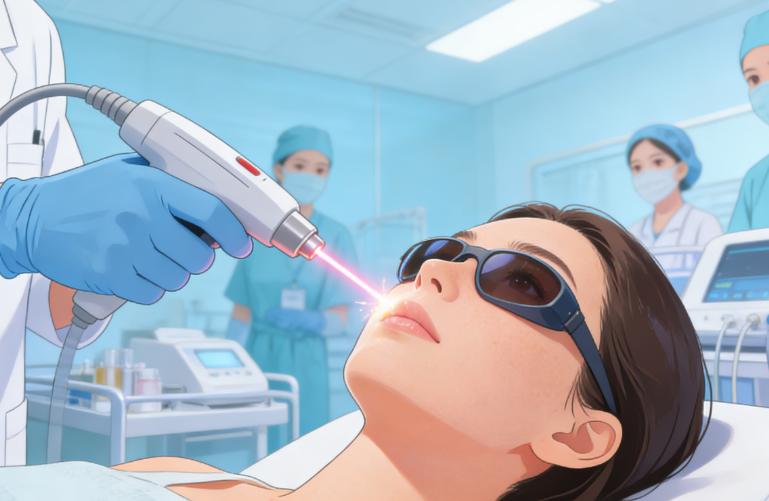
III. Why are the prices of dermatology services provided on a assembly-line basis in South Korea generally low?
When researching information, you will find that the costs of Dermatology services in Seoul are generally much more affordable than in other places. For example:
- Hydrofiller injections: approximately 1,500 to 4,000 yuan
- Rejuran: Approximately 7,000 to 15,000 yuan
- Laser skin rejuvenation: Approximately 1,500 to 5,000 yuan
There are mainly three reasons why the prices are low:
- High footfall leads to increased operating costs: Popular clinics receive hundreds of patients every day, resulting in rapid depreciation of equipment and rising rent expenses.
- High degree of standardization in the process: Doctors do not need to engage in complex design work; they simply need to determine the appropriate indications and carry out the procedure accordingly.
- Centralized purchasing on a large scale: Large chain organizations possess considerable bargaining power when purchasing medications and equipment, which naturally results in lower costs.
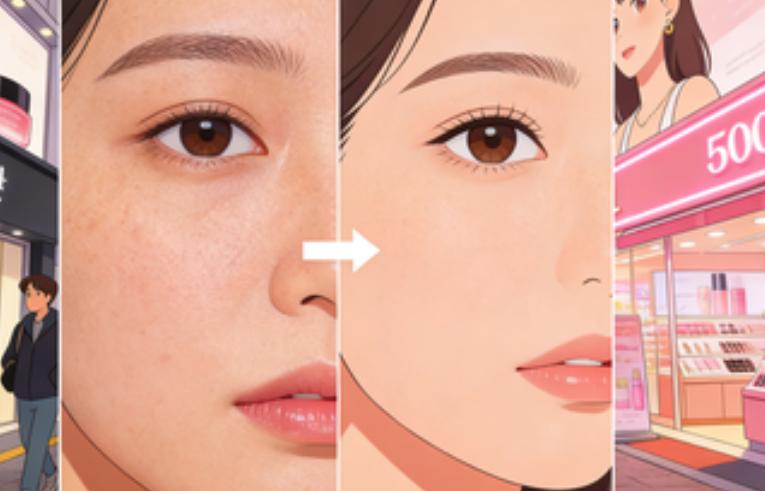
IV. After visiting 10 Dermatology clinics in South Korea, I discovered some rather disheartening truths…
After visiting several clinics in Seoul, I realized one thing: the medical aesthetics industry there is actually one that is “driver-oriented,” with consultants playing a key role in its operation.
In many hospitals, the process is as follows: the consultant conducts a 15-20-minute consultation, while the doctor takes just a few dozen seconds to confirm the treatment plan. Many first-time visitors may feel that this approach is perfunctory, but in the local system, this is actually the norm. After all, most minor cosmetic procedures are essentially standardized treatments, and the role of the doctor is more akin to that of a “technician” who carries out the final step of the process.
V. Analysis of the advantages and disadvantages of South Korea’s streamlined Dermatology services
🎯 Advantages:
- Excellent cost-performance ratio: Extremely suitable for those with limited budgets.
- Doctors have extensive practical experience: Due to handling a large number of cases every day, doctors have developed a high level of proficiency in using needles and performing laser treatments.
- Rapid equipment updates: To remain competitive, such clinics typically introduce the latest instruments as soon as they become available.
⚠️ Disadvantages:
- The consultation time with the doctor is extremely short: it is very difficult to have an in-depth discussion about aesthetic issues with the doctor; usually, you just go in, have the procedure done, and then leave.
- Low degree of customization: The plans are relatively fixed, making it difficult to make adjustments tailored to individual preferences.
- Waiting in line for eternity: Even if you manage to reserve a spot at a popular clinic, waiting for one or two hours on-site is an inevitable part of the experience.

VI. How should one choose a hospital for their first cosmetic surgery experience in South Korea?
If you are a newcomer, please remember these three essential principles for staying safe:
- Decide on the treatment first, then choose the hospital: Don’t blindly pursue well-known or prestigious institutions. First, determine whether you want to undergo “basic maintenance” or “major cosmetic procedures”.
- Identify the different types of
- hospitals:
Large-chain, mass-produ
ced hospitals: Suitable for procedures such as Botox injections, hyaluronic acid fillers, - and laser treatments.
Doctors’ private
practice clinics: Ideal for minor cosmetic procedures that require the doctor’s personal aestheti - c judgment, such as Filler injections.
High-end, customized hospitals: Perfect for those with sufficient budgets who pursue ultimate precision in their treatments.
- hospitals:
- Look at real post-operative reviews: Don’t just rely on the beautiful photos provided by the official sources; instead, read more about the honest feedback from ordinary people on forums, as well as the areas in which doctors excel.
There is no absolute good or bad; it’s all a matter of whether something is suitable or not.
Many people instinctively think that a “assembly line” approach is unreliable, but upon closer examination, you will realize that it is actually a highly efficient model of medical service delivery.
In essence, here’s the conclusion: There is no absolute distinction between good and bad medical aesthetics treatments in South Korea; what matters is whether they are suitable for a particular individual.
If you simply want to take advantage of your travel schedule to undergo some basic treatments such as hyaluronic acid injections, laser therapy, or Botox injections, a standard Dermatology clinic can fully meet your needs at extremely competitive prices. However, if you are seeking customized anti-aging treatments or planning to undergo more complex surgeries, I strongly recommend choosing a “doctor-led” specialized clinic.
Your face is not just a component on an assembly line. What really matters is not the size of the hospital, but whether you have chosen the right type of clinic that meets your specific needs. Dear friends, if you still have any questions and would like to consult online, you can simply click the button below!