
Before going to South Korea for cosmetic procedures, there are a few things I wish someone had told me. ✨ Having spent so much time in Seoul, I’ve seen too many people encounter problems: overcharging, using non-genuine equipment, or claims that the treatment was performed by the director actually being made by assistants… This article is simply meant to share my own observations as well as the mistakes my friends made. I hope it will help you have a smooth experience if you decide to undergo cosmetic treatments in South Korea.

Why are there still risks associated with medical beauty treatments in South Korea?
The overall standard of medical aesthetics in South Korea is indeed high, but a “high-standard market” does not mean there are no problems. In such a highly competitive environment, some hospitals attract tourists by offering low prices and then try to cut costs by requiring additional purchases, using inferior equipment, or having other staff perform the procedures. A friend of mine had this experience: although it was agreed that the chief physician would perform the HIFU treatment, she found that it was actually an assistant doing it, and the consultant explained that the chief physician was too busy. This is a typical example of such issues.
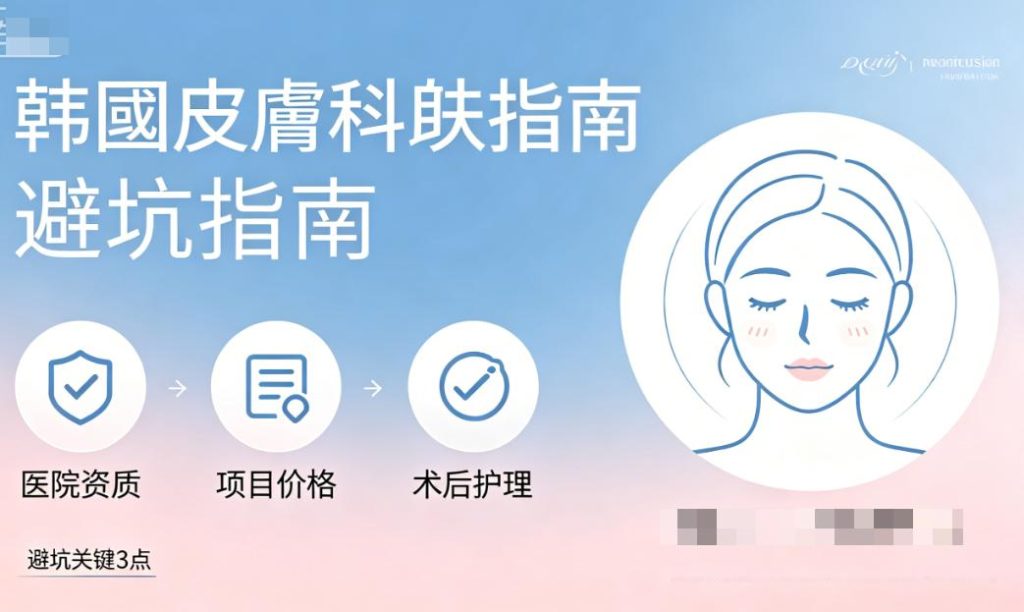
A guide to avoiding common pitfalls in Dermatology in South Korea: 10 major traps to avoid 🔥
⚠️ Danger Zone 1: The Low-Rate Trap
I have inquired myself, and the prices vary greatly – the cost of using HIFU for the entire face can range from 500,000 to 1.2 million Korean won, while the normal range should be around 700,000 to 1 million Korean won. Those services that are too cheap are either due to outdated equipment, insufficient treatment sessions, or being performed by non-medical professionals.
- When seeing a “super low-price offer”, it is essential to clarify which model of equipment it is and how many treatments are included in the package.
- If the price is more than 30% lower than the market rate, you must ask for an explanation.
- Don’t let slogans like “Limited offer today” push you into making decisions under pressure—most advice given in such circumstances contains underlying issues.
⚠️ Danger Zone 2: Non-original equipment or older models
- It is necessary to inspect the equipment’s certification label on-site; this label is usually attached to the machine itself.
- You can simply ask, “Which generation is this? What is the certification number?”
- The probe of the HIFU device should be opened and inspected on-site before the treatment; you are entitled to request to see the packaging.
- Many people don’t realize that there are indeed counterfeit HIFU probes on the market – these products are 3 to 5 times cheaper, but their effectiveness is significantly inferior.
⚠️ Danger Zone 3: It was agreed that the dean would handle it, but someone else took over instead.
- When making an appointment, please specify the doctor you wish to see and confirm their schedule.
- If someone else takes over after you enter, have the courage to raise your concerns.
- Those who make reservations through BeautsGO can indicate “Requested by the chief physician” in the remarks section.
⚠️ Danger Zone 4: Forced promotion of multiple treatment packages
- Before consulting, set a clear budget limit in your mind and stick to it firmly.
- If the other party keeps pushing products or services that you don’t need, you can simply say, “Today, I am only interested in XXX,” and then stop the conversation.
- A good hospital should not make you feel pressured.
⚠️ Danger Zone 5: Additional charges after the procedure
- Before starting the treatment, make sure to check whether “post-treatment care fees are included” or not.
- Some hospitals might mention after the procedure that “this ointment requires an additional fee”; it’s important to confirm this in advance.
- By booking through BeautsGO, you can get a clear understanding of the fee structure in advance.
⚠️ Hazard Zone 6: Poor translation quality leads to communication failures
- It is essential to ensure that translators fully understand these critical requirements; if necessary, explain them in detail in written form.
- If you have sensitive skin, a history of allergies, or are currently taking any medications, it is essential that your doctor be fully informed about these details.
- I recommend using the BeautsGO platform; they have professional Chinese-speaking customer service to assist with communication, which is much safer than trying to explain things yourself.
⚠️ Danger Zone 7: Undergoing high-risk treatments on your last day of travel
- Procedures such as HIFU and Thermage, which require a recovery period, should be completed at least 3 days before returning home.
- If you experience any discomfort and need to return for a follow-up visit, it is important to allow some time in between.
- Never undergo laser freckle removal on the day before your trip, as ultraviolet rays can make the freckles darker.
⚠️ Warning 8: Signing a contract without reading it carefully enough
- Always read all documents carefully before signing them, especially those containing the “no-refund” clause.
- Be cautious when paying in advance for treatment; if the hospital goes bankrupt later, you might not get your money back.
- It is recommended not to prepay for more than one month’s worth of treatment fees at once.
⚠️ Danger Zone 9: Trusting street flyers or recommendations from strangers
- In the tourist areas (Myeongdong, Dongdaemun), some people take the initiative to approach tourists and recommend hospitals. Usually, they do this in exchange for a commission, so these recommendations are not necessarily genuine.
- What you should look for are hospitals recommended by friends who have actually visited them, or those that have received a large number of genuine reviews on REDnote.
- The reviews on BeautsGO are relatively authentic, as only those who have made reservations through the platform are allowed to leave comments.
⚠️ Warning 10: Incorrect postoperative care can lead to serious problems.
- HIFU/Radiofrequency ablation: Do not steam your face or soak in hot springs within one week after the procedure.
- Laser treatment: It is essential to strictly avoid sun exposure after the procedure; otherwise, all previous efforts will be wasted.
- Injections: Do not massage your face within 24 hours after the procedure, and avoid strenuous exercise.
- Many people don’t realize that drinking plenty of water and supplementing with Collagen after the procedure can help accelerate the onset of therapeutic effects.
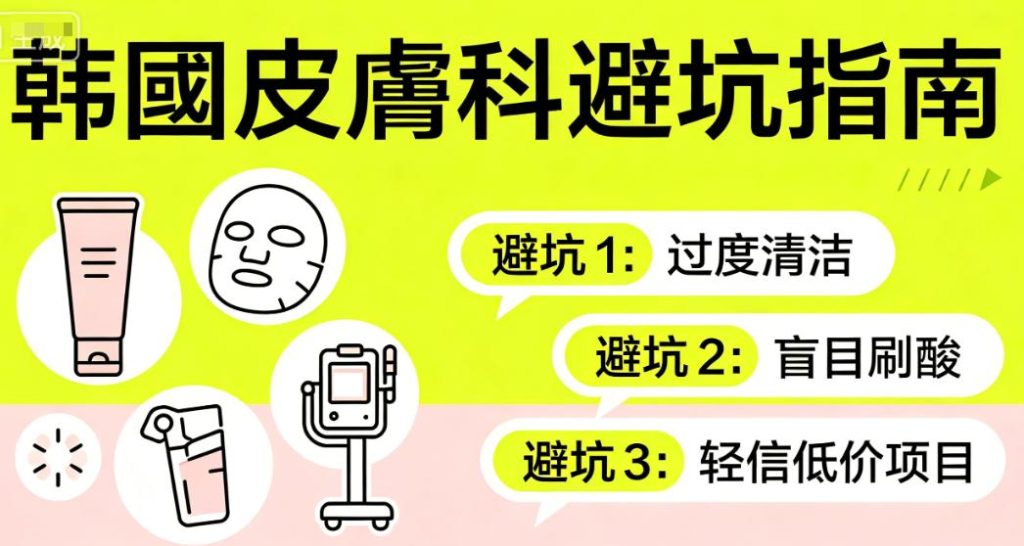
My criteria for choosing a Dermatology department in South Korea
Among all these hospitals, my personal selection criteria are quite simple:
- It has a Google rating of 4.5⭐ or above, and it also receives a large number of reviews – not just a handful.
- On REDnote, real users share their experiences (not all of them are promotional content).
- The IG account features real cases before and after the procedures.
- You can make reservations through BeautsGO (the platform undergoes strict reviews, so it’s quite reliable).
- No pressure during the consultation process.
📲 Recommendations for making appointments at Dermatology clinics in South Korea
I personally use BeautsGO for making appointments, as it’s much more convenient to communicate in Chinese. On the platform, you can directly see the ratings, real reviews, equipment information, and transparent prices of various clinics, which helps to avoid many potential pitfalls. Especially for those who are not familiar with Korean, this platform really saves a lot of trouble.

Overall, medical beauty treatments in South Korea are still worth trying. As long as you do your homework carefully and choose the right hospital, most people will have a positive experience. These 10 potential pitfalls should help you avoid most of the problems before you proceed. If you have any specific questions, feel free to leave a comment and ask me!
Frequently Asked Questions
Q: What are the most common pitfalls in the medical beauty industry in South Korea?
A: The three most common pitfalls in the medical beauty industry are: ① Hidden price increases (foreigners are charged extra without prior notice); ② Substitution of products (cheap alternatives being passed off as genuine goods); ③ Aggressive sales tactics (constant addition of additional services during in-person consultations). This article provides detailed methods to avoid these issues.
Q: How can I ensure that the medications used during the treatment are genuine products?
A: Reputable clinics will open the packaging in front of you and show you the details of the medication. Some clinics also offer the option of scanning codes for verification. If a clinic refuses to do this or you have any doubts, it is advisable to find another one.
Q: What should I do if a dispute arises?
A: It is recommended to keep all records of conversations, receipts, as well as pre- and post-treatment photos. You can file a complaint through the South Korea Medical Dispute Mediation Committee or seek assistance from the Taiwan Representative Office in South Korea. It is more secure to choose a clinic that uses a third-party platform when making an appointment.
Related recommendations
- How to make an appointment at a Dermatology clinic in South Korea? A step-by-step guide to the consultation process and appointment procedures.
- Should I consider going to a Dermatology clinic with a “assembly line” approach in South Korea? The truth after visiting 10 such clinics in person…
- Reservation Guide for South Korea’s Medical Aesthetics Service BeautsGO
- Travel Guide to Plastic Surgery in Seoul, South Korea
- Before considering undergoing cosmetic procedures in South Korea, you must first confirm these details thoroughly.
- Recommended Dermatology clinic in Seoul’s Seongsu area | A popular dermatology clinic frequented by young people in the trendy district – after my treatment, I could only say: It was worth it!