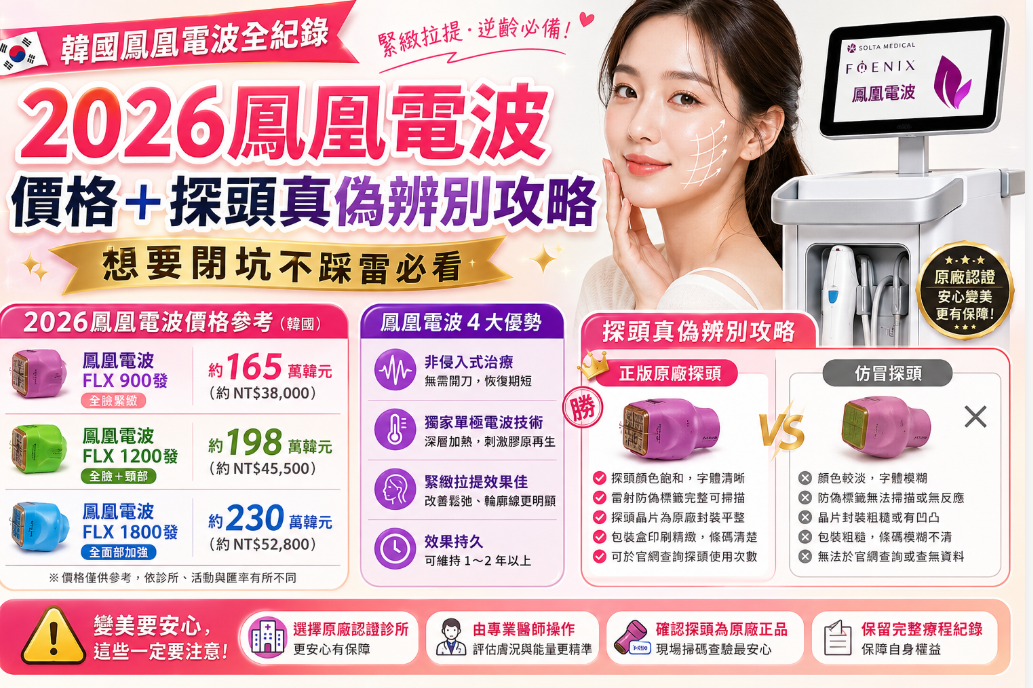
Korean Phoenix Radio Wave Complete Record | 2026 Phoenix Radio Wave Prices +
Guide to Identifying Genuine Probes – A Must-Read if You Want to Avoid Mistakes
Is it really worth going to South Korea in 2026 to undergo the Phoenix radio wave treatment? This article compares the prices of Phoenix radio wave treatments at the top 10 most popular dermatology clinics in Seoul, South Korea. From high-end clinics in Cheongdam-dong to visitor-friendly clinics in Myeongdong, from those offering great value in Hannam-dong to the favorites of young people in Seongsu-dong, the cost ranges for 600 and 300 sessions are clearly presented. More importantly: how can you tell whether a Phoenix radio wave treatment device is genuine? What pitfalls have I already avoided for you? After reading this article, you can make your appointment with confidence, ensuring that you don’t spend any extra money needlessly.
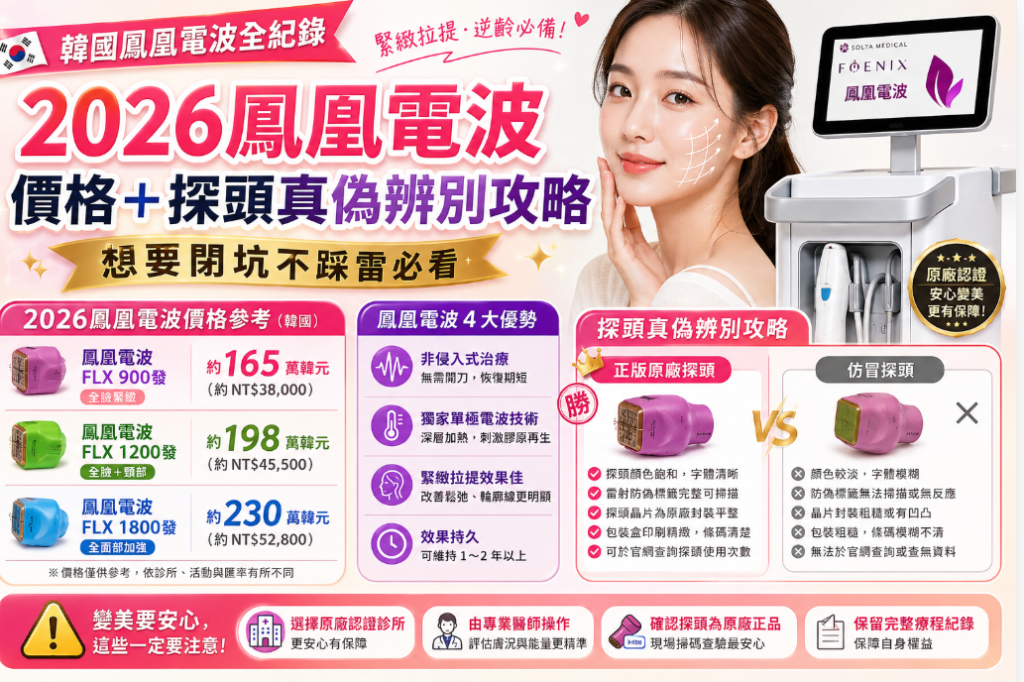
Market Trends in the Korean Phoenix Radio Industry in 2026: How Does It Compare to Taiwan Province?
💰
In South Korea, the market price for the 600-shot Phoenix radio wave device ranges from 9.16 million to 9.3 million Korean won (approximately NT$36,000 to $68,000). The price differences are mainly due to factors such as the location of the clinic, the qualifications of the practitioner, and whether the device is an authentic or imported version. Compared to Taiwan, where the price for a similar 600-shot Phoenix radio wave device is around NT$70,000 to $100,000, undergoing treatment in South Korea can save you 40% to 50% on costs. Even when including the round-trip airfare, the total cost is roughly equivalent to what it would cost to have the treatment done in Taiwan, making it significantly more cost-effective.
But it’s important to clarify from the start: Starting from January 1, 2026, South Korea’s medical beauty tax rebate policy (10% VAT refund) has officially come to an end. In other words, the previous benefit that allowed customers to get a tax rebate after receiving medical beauty treatments is no longer available. Therefore, when calculating the prices, you should no longer include this tax rebate in the calculations.
Price Comparison of the Top 10 Popular Clinics in Seoul: Phoenix Radio Wave Treatment (600 sessions vs 300 sessions)
💰
Below is a compilation of the price ranges for the top 10 dermatology clinics in Seoul that received the most discussions and searches in 2026. The data is based on publicly available information from various platforms and market research and is for reference only—the final prices will still be determined by the doctor after a personal consultation, taking into account factors such as the number of treatments and the energy settings used.
| Clinic Name | region | Price for 600 units | Price for 300 units | Featured Tags |
|---|---|---|---|---|
| 1. HEV Dermatology Department | Gangnam | Between 20 million and 25 million yen | Between 12 million and 1.5 million yen | The pinnacle of anti-aging treatments in Gangnam |
| 2. 4ever Dermatology Cheongdam Branch | Cheongdam-dong | Between 22 million and 2.8 million yen | Between 13 million and 17 million yen | The top choice in the Cheongdam area |
| 3. Saivin Cellon Dermatology Clinic | Cheongdam-dong | Between 30 million and 3 million yen | Between 14 million and 1.8 million yen | Government-certified premium clinic |
| 4. UMI Beautiful Dermatology | Myeongdong | Between 17 million and 2.2 million yen | Between 10 million and 1.4 million yen | The top choice for shopping and medical beauty treatments in Myeongdong |
| 5. Serene Holy Water Dermatology Clinic | holy water | Between 16 million and 21 million yen | Between 9.95 million and 1.3 million | The Suddenly Popular Treasure Store on Dcard |
| 6. Shinederma Dermatology Department | Dongda Gate | Between 17 million and 2.2 million yen | Between 10 million and 1.35 million yen | An excellent choice for convenient transportation |
| 7. Theippo Dermatology Department | Sinsa | Between 19 million and 24 million yen | Between 11 million and 1.5 million yen | An expert with 15 years of experience |
| 8. ELVIA Dermatology Department | Gangnam | Between 18 million and 24 million yen | Between 11 million and 1.5 million yen | Xieou Pavilion Emergency Clinic |
| 9. Meilaxi Milacc Dermatology | Hannam-dong | Between 16 million and 2 million yen | Between 9.95 million and 12.5 million | The top choice with a high cost-performance ratio |
| 10. Hertique Dermatology Clinic | Gangnam | Between 19 million and 2.5 million yen | Between 11.15 million and 1.5 million yen | Luxury Personalized Medical Treatment |
⚠️ The prices mentioned above are based on market research conducted in June 2026 and are for reference only. The actual cost will vary depending on individual facial conditions, the number of hairs required, and the assessment results provided by the doctor. Please refer to the quotes obtained during a face-to-face consultation at the clinic for accurate pricing.
How to Identify the Authenticity of Phoenix Radio Wave Probes: These 5 Tips Will Help You Avoid Being Scammed Again
⚠️
The biggest problem with Phoenix Radio Wave is not necessarily its high price, but rather whether the probes you use are genuine. With the vast Korean medical beauty market, some unscrupulous vendors may use recycled or counterfeit probes to drive down prices. Here are five tips to help you identify the authenticity of probes on the spot and protect both your face and your wallet.
The first trick: Open the package in front of you and never compromise. Genuine Thermage FLX probes are packaged in disposable containers, and the clinic must open them right in your presence. If they claim, “We’ve already opened it for you” or “The previous customer used it but didn’t finish the treatment,” just leave immediately. A probe is designed to be used by only one person and should be discarded after use.
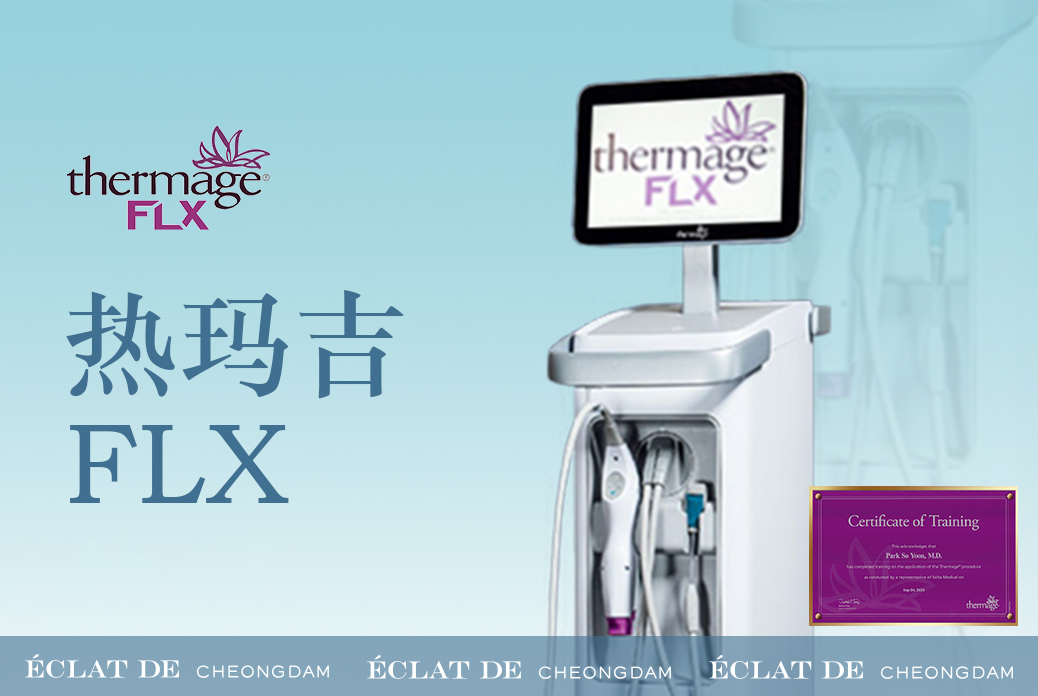
The second method: Scan the QR Code for verification. Every genuine probe package comes with a unique QR Code. Upon scanning it, you will see the probe’s serial number, production date, and whether it has been used before. If the page that appears states “Already used” or if the code cannot be scanned at all, then it is definitely a fake product.
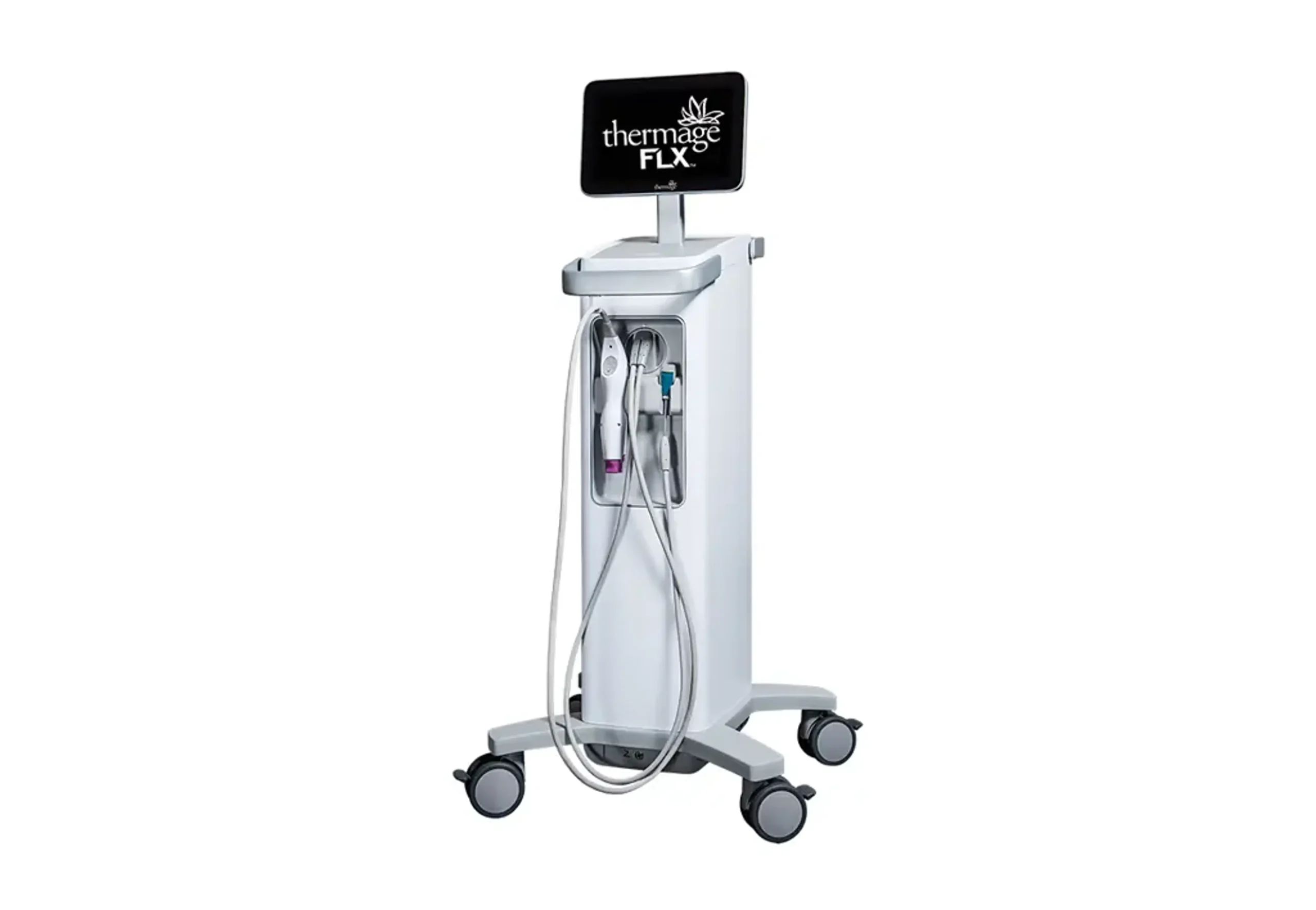
Third step: Verify the model of the device. The Thermage FLX is the fourth-generation model, and it comes with a clear “FLX” logo on the machine. The third-generation model is called Thermage CPT, and it has a different appearance. Some clinics may use the third-generation CPT to impersonate the fourth-generation FLX in order to reduce costs; these devices are cheaper, but their effectiveness and comfort level are inferior. When you enter the treatment room, take a quick look to see if there is an “FLX” label on the machine.
The fourth trick: The “Purple Diamond Probe” is the mainstream choice. Among the most commonly used probes by Phoenix Radio Wave is the “Purple Diamond Probe” (Total Tip 4.0), which has a treatment area of 4 square centimeters and can penetrate to a depth of 4.3 millimeters. For the eyes, the “Blue Eye Probe” (Eye Tip) is used, as it has a smaller treatment area of only 0.25 square centimeters. If a clinic claims to use a “Blue Diamond Probe” or a “Golden Probe,” you should ask for clarification—since the Blue Diamond Probe is very rare in Korea, the Golden Probe is primarily used for treating other parts of the body.
The fifth tip: If the price is too low, there must be something wrong. If a clinic offers 600 treatments for just under 91.5 million Korean won, you should be extremely cautious. The cost of genuine treatment devices is well-known; if the price is so low, it’s either because they are reusing old devices or because they are using the Korean version of Oligio to pretend it’s the American version of Thermage. Oligio itself isn’t a fake product; it’s a legitimate radiofrequency device manufactured in South Korea. However, its effectiveness and durability are not on par with the American Thermage FLX. The key thing is to understand what you’re actually getting—don’t spend the money for Thermage but end up with something that’s just Oligio.
6 Common Pitfalls in Korean Phoenix Radio Wave Treatments: What I’ve Experienced, I Share with You
⚠️
Trick 1: The “Electroacoustic Double Treatment” package hides hidden tactics. Many clinics promote bundled packages that combine “Phoenix Radio Waves” with “Hafe Sound Waves,” which seem very cost-effective. However, in reality, the number of treatments delivered by these technologies may be reduced. Make sure to inquire about the exact number of treatments included in each package, rather than just focusing on the total price.
Trick 2: A consultation with the director does not necessarily mean that the director will perform the treatment. Some clinics claim to offer “personal consultations by the director,” but in reality, it may be the director who conducts the initial consultation, while the actual treatment is performed by a nurse or an intern doctor. When making an appointment, be sure to ask clearly: “Will the same doctor perform the entire treatment from start to finish?”
Trick 3: Low-cost translations do not necessarily mean high-quality Chinese-language services. Some clinics claim to offer Chinese-speaking assistance, but in reality, they often hire part-time Chinese students as translators, who often fail to accurately translate medical aesthetics terminology. It is recommended to choose clinics that have a dedicated Chinese-speaking supervisor or those that use the BeautsGO platform for appointments, as these ensure higher-quality translation services.
Trick 4: Postoperative follow-up services are fake. Although these services are claimed to exist, after the procedure, messages sent via Line remain unread, and calls on WeChat go unanswered. Choose a clinic that provides clear postoperative follow-up mechanisms, such as follow-ups at 7 days, 1 month, or 3 months.
Trick 5: Faking the number of treatments. The Phoenix Radio Wave machine keeps track of the actual number of treatments administered. After the procedure, ask the clinic to show you the Treatment Summary page on the machine, which will clearly indicate how many treatments were performed and what type of probes were used. If the clinic refuses to provide this information, be cautious.
Misconception 6: The recovery period is often downplayed. Although there are no visible scars after the procedure at Phoenix Radio Wave Clinic, mild redness, swelling, and a feeling of heat may occur in the 2 to 3 days following the surgery. It is essential to abstain from alcohol for 3 days after the procedure, avoid saunas and steam baths for 7 days, and increase sun protection for 2 weeks. If a clinic claims that you can immediately use a steam bath after the treatment, it is irresponsible of them.
Phoenix Radio Wave Treatment: How Soon Does It Take to See Results? How Long Do They Last?
✨
Immediately after the procedure: You can immediately observe approximately 20% of the tightening effect – this is because collagen contracts immediately when heated. However, this is merely the “first impression”; the real results come later on.
2 to 4 weeks after the procedure: The skin begins to show noticeable firming and an increased glow, and it also feels more elastic to the touch. This period marks the beginning of the regeneration of collagen.
3 to 6 months after the procedure: The results reach their peak. The jawline becomes clearer, the nasolabial folds fade, and the overall facial contours appear more defined.
Duration: It generally lasts for 1 to 1.5 years, depending on an individual’s physical condition and maintenance habits. Many people consider it a “annual major treatment,” and having it done once a year is just right.
Frequently Asked Questions
Q: What is the price difference between Korean Phoenix Radio and Taiwanese products?
A: Taking a full-face treatment with 600 injections as an example, the market price in South Korea ranges from approximately 9.16 million to 9.3 million Korean won (equivalent to around NT$36,000 to NT$68,000), while in Taiwan it costs around NT$70,000 to NT$100,000. The difference in cost is roughly 40% to 50%. Even if you include the round-trip airfare, the total cost of having the treatment twice in South Korea might actually be cheaper than having it once in Taiwan.
Q: Is it safe to undergo phoenix radio wave treatment in Korea? How can one ensure that the equipment used is genuine?
A: Choose a clinic that has been certified by legitimate platforms such as BeautsGO. Genuine clinics will open a brand-new probe in front of you, and the probe packaging will contain a QR Code that can be scanned for verification. After the treatment, ask the clinic to provide the Treatment Summary page to confirm the actual number of probes used. If the clinic is unwilling to cooperate with these steps, it is recommended that you find another one.
Q: Is the procedure associated with any pain during the Phoenix Radio Wave treatment? Is anesthesia required?
A: Compared with the third-generation CPT, the Phoenix FLX model adds vibration and cooling spray functions, significantly reducing the discomfort associated with the treatment. Most people describe the sensation as “warm and tingling” rather than “painful”, so it is generally tolerable. Clinics usually apply local anesthetic 20-30 minutes before proceeding with the treatment, and the entire process takes approximately 40-60 minutes.
Q: How should one choose between 600 and 900 injections? Is 600 injections enough for people with smaller faces?
A: 600 grafts represent the most common “gold standard” in South Korea and are suitable for the majority of people who wish to achieve a firming effect on their entire face. For those with larger facial areas or more severe signs of sagging, 900 grafts are recommended. For individuals with smaller faces, 600 grafts are more than sufficient. The key isn’t necessarily the higher number of grafts, but rather applying them in the right locations and ensuring that the appropriate amount of energy is delivered during the procedure.
Q: Can I apply makeup and board the plane immediately after getting the Phoenix radio wave treatment?
A: It is not recommended to wear makeup on the day of the procedure; give your skin 24 hours to recover. However, you can go on flights, shop, and eat just as usual. Avoid drinking alcohol for 3 days after the surgery, refrain from using steam saunas or saunas for 7 days, and make sure to protect your skin from the sun for 2 weeks.
Or
Chinese customer service will respond promptly.
💬 WeChat reservation: Hannah972
Chinese customer service will respond promptly.
Related Recommendations
📌
- 2026 Seoul Cheongdam High-End Dermatology Awards: Why Was Saewon Cellon Recognized by the Korean Government?
- I finally decided to give it a try! The highly discussed “serene dermatology clinic” on Dcard and REDnote – should I really go there?
- Who is the dermatologist at Sinsa theippo? A comprehensive review of Director Kim Han-kyung, who graduated from Yonsei University and has 15 years of experience in the field.
- Everywhere on Dcard, people are promoting Hannam-dong Meilaxi Milacc Dermatology Clinic. Are the results really that amazing? I tried it myself once.
- Gangnam secret Skin Clinic: Practical Tests on “Hydrofiller + Ultrasound” – Are the Results Really That Amazing?