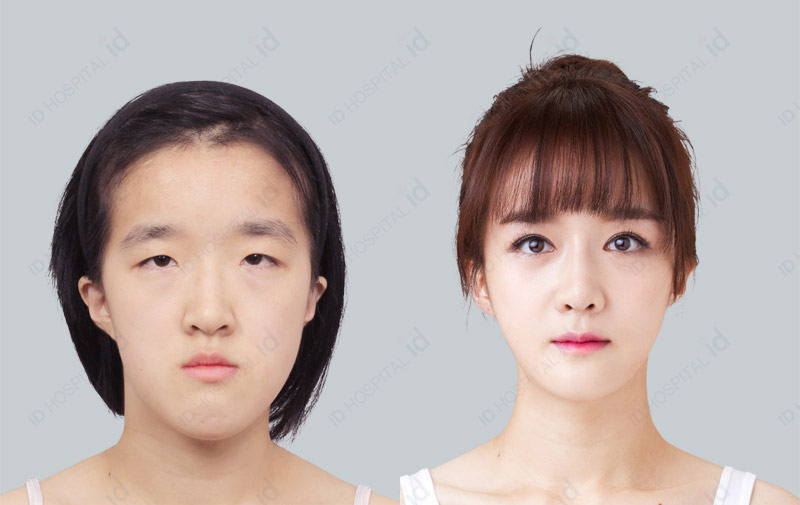
It has been exactly 180 days since I underwent the Double Jaw Surgery. I had the procedure performed at ID Plastic Surgery in South Korea in December 2025 by Director Park Sang-hoon, and it has now been half a year. This post is not intended for professional use; rather, I simply want to share with you the changes in my face shape over these six months, the recovery process, as well as some little details that perhaps no one else has mentioned. I’ve seen many people on Dcard asking whether the Double Jaw Surgery is really worth doing, how painful it is after the operation, and how significant the changes in facial appearance will be – this post aims to answer all those questions.
Why choose ID Plastic Surgery? I spent half a year doing my research.
💡
Let me first explain my situation: I have underbite and a crooked jaw. I have been undergoing Orthodontics for two years, but the results have been limited. My dentist said that to completely resolve the issue, bone surgery would be necessary. I consulted three hospitals in Taiwan, and the costs ranged from NT$450,000 to NT$550,000. However, the treatment plans proposed by each doctor were somewhat different, which made me feel uncertain about the outcome. Moreover, the waiting times for treatment all exceeded six months. So, I decided to do some research on South Korea’s options instead.
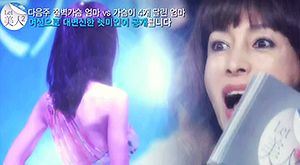
There are three main reasons why I chose the ID Plastic Surgery Center for my Double Jaw Surgery: First, Director Park Sang-hoon is the chief surgeon behind the popular Korean plastic surgery show “Let Beauty.” I have been following this show for several years, and seeing the incredible changes in people’s facial shapes that he has achieved has completely won my trust. Second, his “non-binding technique” is a huge advantage for someone like me who is very sensitive to pain—after the surgery, there is no need to wear a mouth brace, allowing me to speak and eat normally. This alone makes it far superior to traditional Double Jaw Surgery methods. Third, the ID Plastic Surgery Center is a licensed medical institution recommended by South Korea’s Ministry of Health and Welfare. It is not one of those small clinics with just one or two floors, so I feel much more at ease about the safety aspects.
Preoperative preparations and consultations: More thorough than you might think
📋
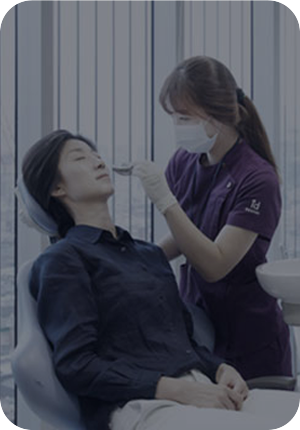
I made my appointment through the BeautsGO platform, and a Chinese-speaking customer service representative assisted me throughout the process (WeChat ID: Hannah972). The communication was completely smooth. On the day of the consultation, I underwent a full range of examinations: 3D CT scanning, oral X-rays, blood tests, and an electrocardiogram. The entire process took nearly two hours. Dr. Park then personally reviewed the results and used 3D simulation software to explain to me in detail where the bones would be cut, how many millimeters they would be moved, and what the expected changes in my facial shape after the surgery would be. To be honest, after seeing the simulation images, I decided to go ahead with the procedure because the predictions were so accurate. When I returned for a follow-up examination five months later and had another CT scan done, the results were almost identical to those predicted in the simulation—the difference was within one or two millimeters at most.
During the in-person consultation, there was one detail that left a deep impression on me: Director Park explained that the degree of my jaw misalignment was considered moderate, and the results after the surgery would be quite noticeable. However, due to the inherent asymmetry between my left and right sides of the face, achieving perfect symmetry was simply impossible, so he advised me to be mentally prepared for that. This kind of honest and realistic communication, with clear boundaries set, actually made me trust him even more.

On the day of the surgery: I thought I would be so scared that I would start shaking, but actually, it went fine.
🏥
On the day before the surgery, I was admitted to the hospital, and the nurse led me to a VIP International private room. The space was small but very clean. At 7 am, I changed into the surgical gown and had an IV drip inserted. The anesthesiologist came to check my allergy history and discuss the anesthesia plan with me. I have to say that ID is really cautious when it comes to anesthesia; he asked several times and even used the translation app in Chinese to confirm everything with me. I don’t remember what happened after I was taken into the operating room. I woke up at 4 pm and lay in the recovery room for an hour before being transferred back to my room.
Many people ask me if it hurts – to be honest, I didn’t feel anything during the surgery itself (since I was under general anesthesia), but the swelling in the second and third days after the operation was really uncomfortable. It wasn’t so much “pain” as a feeling of my whole face being swollen, as if it were filled with water, making it difficult even to open my mouth. Fortunately, thanks to Director Park’s innovative techniques that didn’t require any binding, my mouth wasn’t tied up, so I was able to drink soup and water using a straw – I’m truly grateful for that. Next to me, a South Korean girl who had undergone traditional double-jaw surgery had her mouth tightly bound, so she could only receive fluids through injections; just thinking about that scene makes me feel sorry for her.
30 days after the procedure: the swelling period, a real hell when it comes to diet, and the first time you look in the mirror again
🫧
The first week was truly the toughest. I could only consume liquid foods such as porridge, soup, fruit juice, and milk; anything that required chewing was strictly off-limits. The hospital would use LDM swelling-reducing devices and LED light therapy every day, and indeed, the swelling would seem to subside a bit after treatment, but it would return once I woke up again – this was a normal phenomenon, so there was no need to worry too much. On the seventh day, during my follow-up visit and suture removal, Director Park personally examined the wound and said that the healing process was going very well. He then allowed me to start trying semi-liquid foods such as steamed eggs, mashed potatoes, and CDU.
Starting from the 14th day, you can start eating soft foods such as porridge, noodles, and soft bread. By this time, the swelling had already subsided by about 60%. When I saw my new side profile in the mirror for the first time, I actually cried in the clinic. Before, I always had to deliberately adjust the angle when taking photos from the side; now, no matter from which angle I took a photo, my jawline was straight. In that moment, I felt that all the pain I had endured before was worth it.
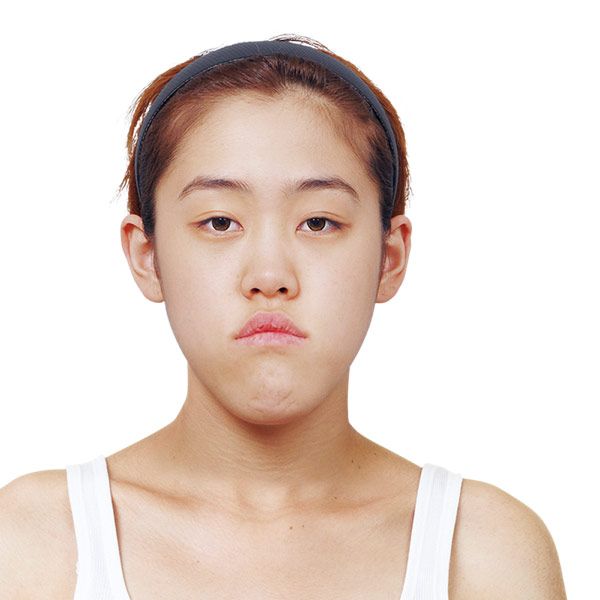
90 days vs 180 days after surgery: The final shape of the face is fully established.
✨
On the 90th day (after 3 months): The swelling had almost completely subsided, and my face shape had become much more natural. My chin had returned to its normal position, and the problem of underbite was completely resolved; the curve of my smile was also much more natural now. Friends said I looked “somehow different, but they couldn’t quite put their finger on it” — that’s exactly the effect a successful plastic surgery should achieve: naturalness, without any signs that anything has been done.
On the 180th day (6 months later): Looking back at the pre-surgery photos now, I truly feel like it’s two different people. It’s not that exaggerated “internet celebrity face” effect; rather, it’s a very natural adjustment in facial proportions. My chin no longer juts forward, my lips close properly, and the contours of my face have changed from being uneven to having a smooth V-line. Most importantly, my bite function is completely normal—food no longer gets stuck in my teeth, and even steak, which used to be difficult for me to chew, is no longer a problem now.
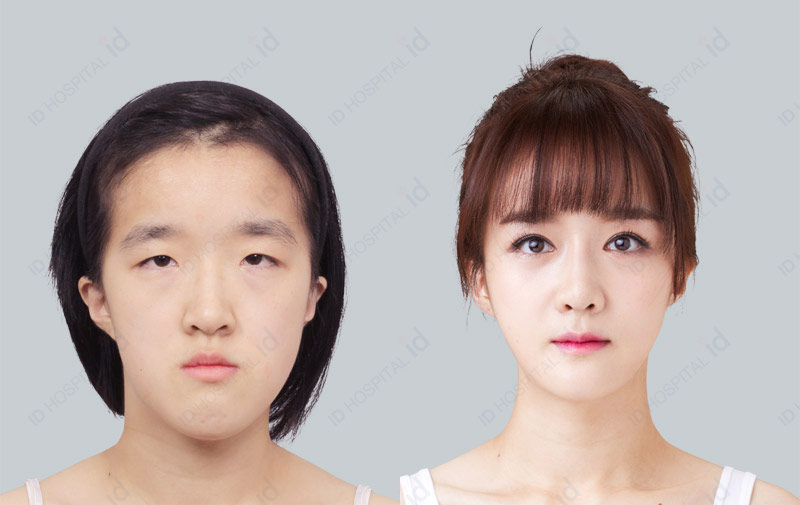
Life Changes 180 Days After the Procedure: Those Details That No One Talks About
👭
After talking about facial shapes, let’s talk about daily life. Double Jaw Surgery doesn’t just change your face; it also affects other aspects that you might not have considered:
- No more drooling while sleeping: Before the procedure, my lips couldn’t stay closed properly, so I would definitely drool when sleeping on my side. After the surgery, my lips can close naturally, and my pillow is never wet anymore.
- The pronunciation becomes clearer: Underbite can affect the pronunciation of certain sounds (such as ㄗ, ㄘ, ㄙ), but after the surgery, these sounds can finally be pronounced clearly.
- The chin no longer feels sore: Previously, due to uneven distribution of stress on the temporomandibular joint over time, my chin would often ache after meals. After the surgery, this problem completely disappeared.
- Taking photos has truly turned from a nightmare into a paradise: in the past, there were only certain angles from which photos could be taken; now, you can shoot from any direction—even the front or side—without any restrictions. This is probably the aspect that I find most beneficial.
- Lifting of self-confidence: In the past, I would subconsciously cover my mouth or turn my face away when talking to people, but now I no longer need to do that at all. This isn’t about vanity; it’s simply about being able to live naturally, without any such habits.
But to be honest, the sensation in some areas of my lower lip and chin has not fully returned yet—some parts still feel numb when touched. This is a normal part of the nerve recovery process, and it is expected to take 6 to 12 months for everything to return to normal. Director Park had explained this to me before the surgery, so I wasn’t surprised. However, if you are particularly concerned about nerve recovery, make sure to ask about it during your consultation.
🌐
An honest review 180 days after the procedure
- Pain sensation: The swelling is most noticeable on the 2nd to 3rd day after the procedure, but it’s not a sharp, tearing pain. With the use of painkillers and proper swelling management, the discomfort is tolerable. By the 4th day, there is a noticeable improvement, and by the 7th day, after the stitches are removed, the comfort level increases significantly.
- Changes in facial shape: 30 days after the procedure, the contours of the jawline have significantly improved; by 90 days, all swelling has subsided, resulting in a natural facial profile; after 180 days, the results are fully stabilized, with ideal proportions on both the side and front views – almost identical to the 3D simulation before the surgery.
- Lifting of quality of life – Complete restoration of chewing function, natural closure of the lips, clearer pronunciation, no more drooling, and no more pain in the temporomandibular joint. Taking photos has changed from requiring a particular angle to simply resulting in great-looking images regardless of the angle.
- Nerve recovery: 180 days after the procedure, there is still a slight numbness in certain areas of the lower lip and chin, which is part of the normal recovery process. Full recovery is expected to take 6 to 12 months. Director Park had clearly explained this point before the surgery.
- Overall satisfaction: 9/10. The only reason I deducted one point is that the recovery period was actually longer than expected; the need to stick to a liquid diet in the first week after the surgery really tested my patience. But if I had to choose again, I would still do it—and I would still choose ID Plastic Surgery.
Frequently Asked Questions
Q: Will it really be so painful that I can’t bear it after the procedure?
A: Rather than “pain,” it’s more like a “severe swelling and discomfort.” The swelling is most noticeable on the 2nd to 3rd day after the procedure, but the hospital provides painkillers and swelling reduction treatments, so by the 4th day, there is already a noticeable improvement. It’s actually more tolerable than I expected, and knowing that my face is getting better makes it easier for me to endure the discomfort psychologically.
Q: How long after the procedure can one return to work or school normally?
A: If you work in an office environment, it is recommended to wait 3-4 weeks after the procedure before returning to work (your face may still be slightly swollen, but this won’t be noticeable if you wear a mask). For jobs that require a lot of talking or physical exertion, it is advisable to wait at least 6 weeks. I returned to work in the fifth week, and wearing a mask was no problem at all.
Q: How long does it take to undergo double-jaw surgery in South Korea?
A: I stayed in Seoul for a total of 23 days: 2 days before the surgery (consultation + examinations) → 4 days in the hospital after the surgery → 17 days of recovery in Seoul (including 2 follow-up visits). If the recovery goes well, 20 days is generally sufficient; however, it’s more advisable to plan for 25 days to be on the safe side.
Q: Is it really impossible to tell at all that someone has had surgery?
A: Strangers may not notice any changes, but those who know you well will feel that “you look better.” Double Jaw Surgery aims to improve the skeletal structure and facial proportions, rather than making drastic changes to individual features. As a result, the effect is one where you “look more attractive, but it’s hard to pinpoint exactly what has changed” – and I think this is precisely the most sophisticated form of cosmetic surgery.
📌
Related recommendations
📌
- 2026 Price List for Plastic Surgery at Korean ID Clinics! A comprehensive overview of the costs for double-jaw contouring, eye, and nose procedures – with detailed breakdowns of the actual amounts.
- How to choose a facial contour surgery clinic in South Korea? For V-line jaw reduction and chin augmentation, those who have already undergone these procedures can tell you which face shape is most suitable for such treatments.
- Where exactly is ID Plastic Surgery in Korea? Just a 3-minute walk from Gangnam Station – a comprehensive guide to the top-ranked double-jaw surgery clinic in the area.
- The complete process of making an appointment at a Korean ID plastic surgery clinic! From consultation to discharge, we will guide you step by step – no need to worry if you don’t speak Korean.
- Top Plastic Surgery Hospitals in Seoul in 2026 | A comprehensive list of 15 top-tier hospitals in Gangnam, Myeongdong, and Hongdae. A must-read for those planning to undergo surgery in South Korea for the first time.
Or
customer service will respond immediately.
💬 WeChat reservation: Hannah972
Chinese
customer service will respond immediately.